The Genesis of the Bf 109
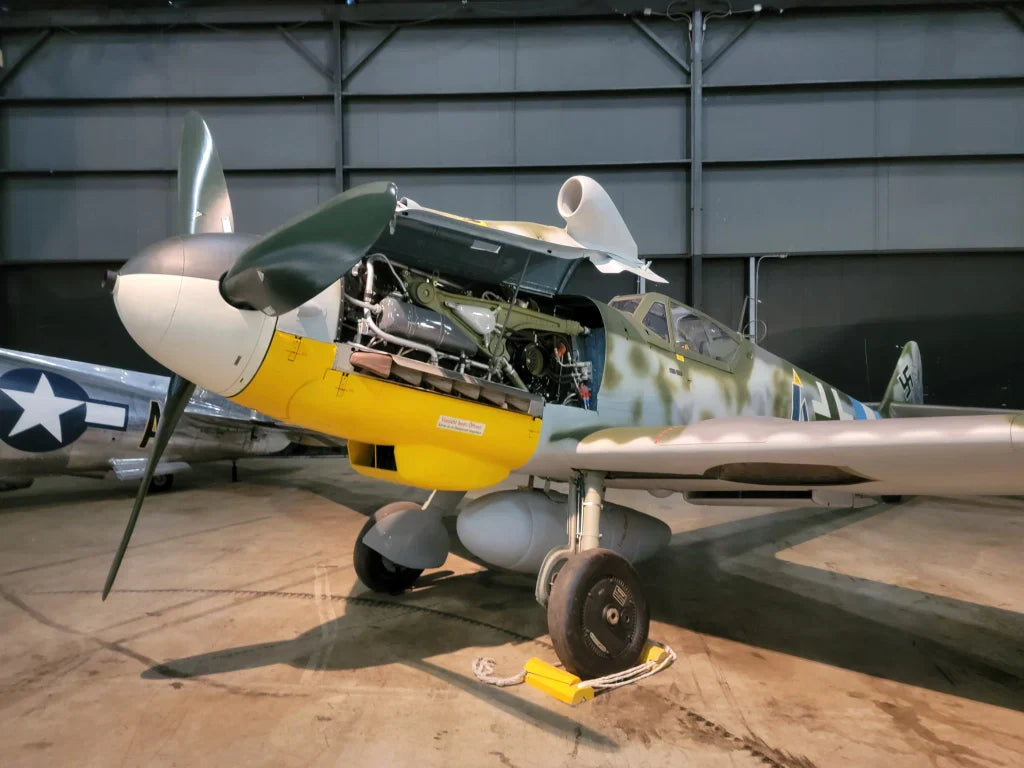
The Bf 109 The Messerschmitt Bf 109 became a premier fighter aircraft during World War II thanks to Germany’s rapidly developing aviation sector during its formative stages before the war. Two individuals who played pivotal roles in its creation were Wilhelm “Willy” Messerschmitt and Robert Lusser from Bayerische Flugzeugwerke (Bavarian Aircraft Works).
The Bf 109’s design was revolutionary for its time, featuring an all-metal monocoque construction, closed canopy design, and innovative retractable landing gear system – features that set it apart in comparison with biplane fighters with open cockpits and fixed undercarriages at that time.
The Bf 109 during the Second World War
As World War II began, the Bf 109 emerged as one of Germany’s premier fighter aircraft. Deployed across every operational theater by their German Air Force and Luftwaffe units alike, its striking versatility proved itself against fierce opposition such as that of British Supermarine Spitfires or American P-51 Mustangs with speed, firepower, and agile maneuverability that kept rival aircraft at bay.
One key element to the Bf 109’s success was its amazing adaptability. Throughout World War II, modifications and enhancements led to various versions, each boasting different capabilities. As it remains one of the world’s most mass-produced fighter aircraft today, its significant role is further evidenced.
Own a Piece of a Bf 109
Bf 109 versus Me 109
One common misconception within aviation circles involves distinguishing between Bf 109s and Me 109s. Are they different variants or entirely separate aircraft? In reality, these two designations refer to the same aircraft!
“Bf 109” was first built and designed by Bayerische Flugzeugwerke in Germany in 1938. Following Willy Messerschmitt’s acquisition of controlling shares and subsequent rebranding as Messerschmitt AG to honor him, its name changed accordingly; with it came its nickname of Me 109 – with “Me” standing for Messerschmitt – thus giving birth to its current form today.
Although both designations were often interchanged during World War II, official Luftwaffe documents consistently referred to the aircraft as Bf 109. Postwar usage and historical accounts often used Me 109 instead, creating confusion for pilots who knew about either model. No matter its designation, however, Bf 109 (or Me 109) made its mark on aviation history.


Share:
Princess Pat's Final Flight, the story behind "Twilight's Last Crucible"
The PBY Catalina: A Legend of the Skies