
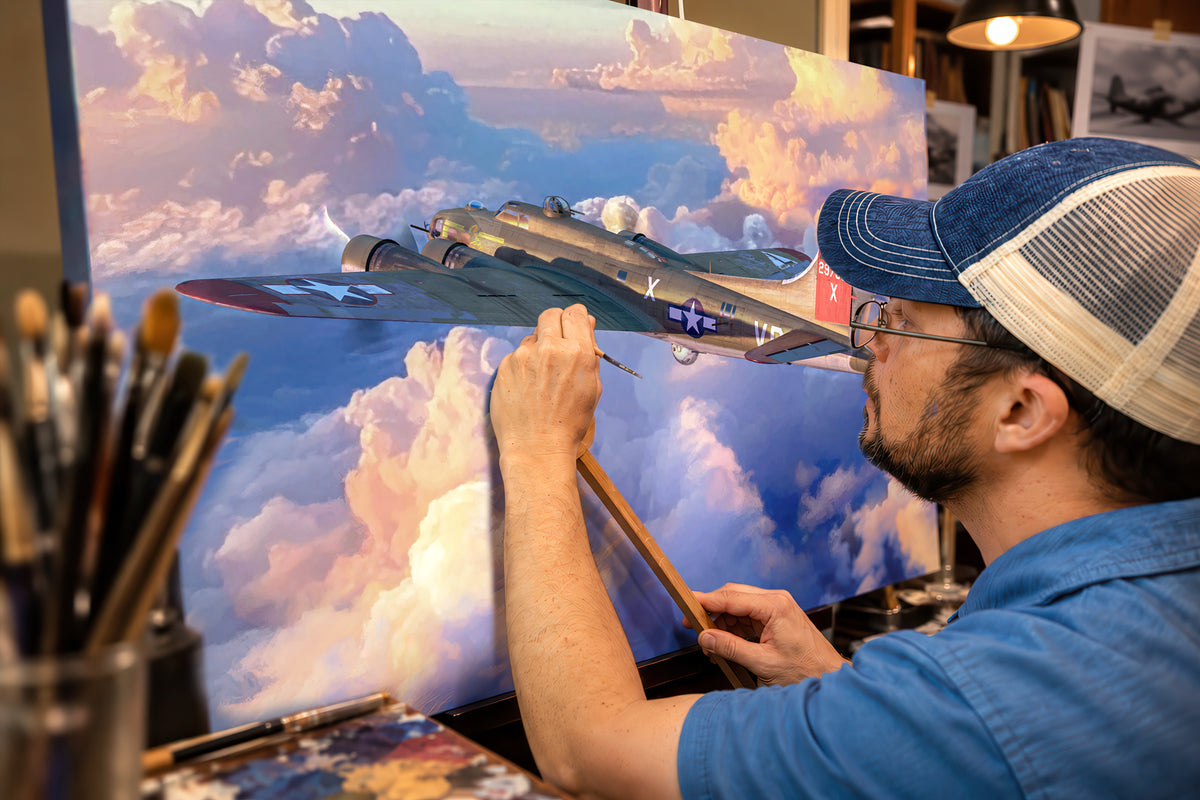

Where History Becomes Art
At Aces In Action, artist Craig Tinder brings the stories of historic aircraft, ships, and the people connected to them into focus through original artwork and authentic historical relics.
Discover the craftsmanship behind each piece—from the careful preparation of historic materials to the finished artwork created to preserve these stories for future generations.
The Story Determines the Artwork
Historical artwork has to do more than look convincing. The aircraft must belong in the scene. The markings have to make sense. The environment, configuration, people, and events need to support the history being portrayed.
Craig's process combines historical research with digital illustration, gradually transforming surviving information into a finished composition that allows the viewer to experience a moment from the past.
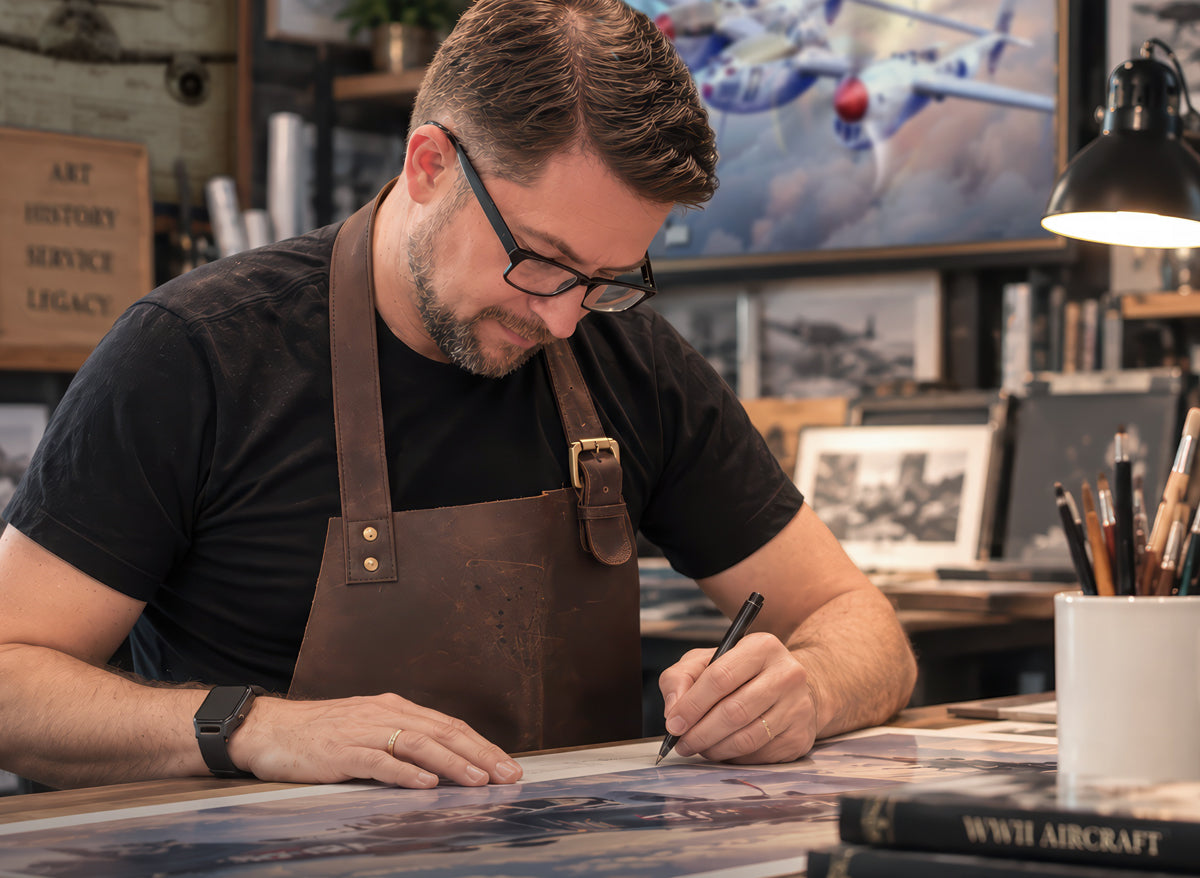
Reconstructing the Story
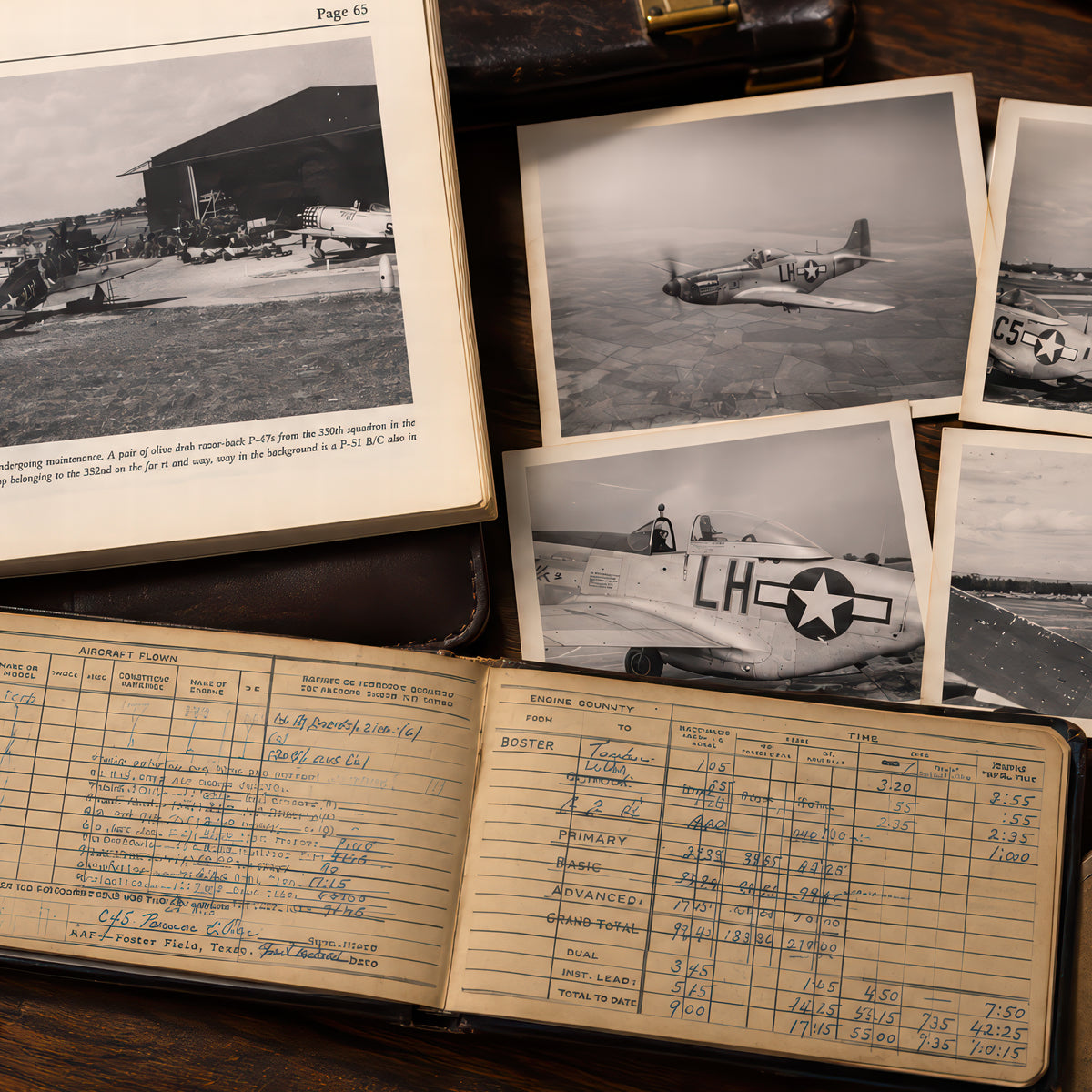
A piece may begin with a mission report, an old photograph, a pilot's logbook, museum records, family documents, or sometimes only a handful of clues.
Craig studies the available material to understand not only what happened, but what the aircraft or vehicle looked like at that particular moment—its markings, configuration, unit, location, and the people connected to it.
When information is incomplete, additional historical sources help fill in the gaps.
Building the Moment
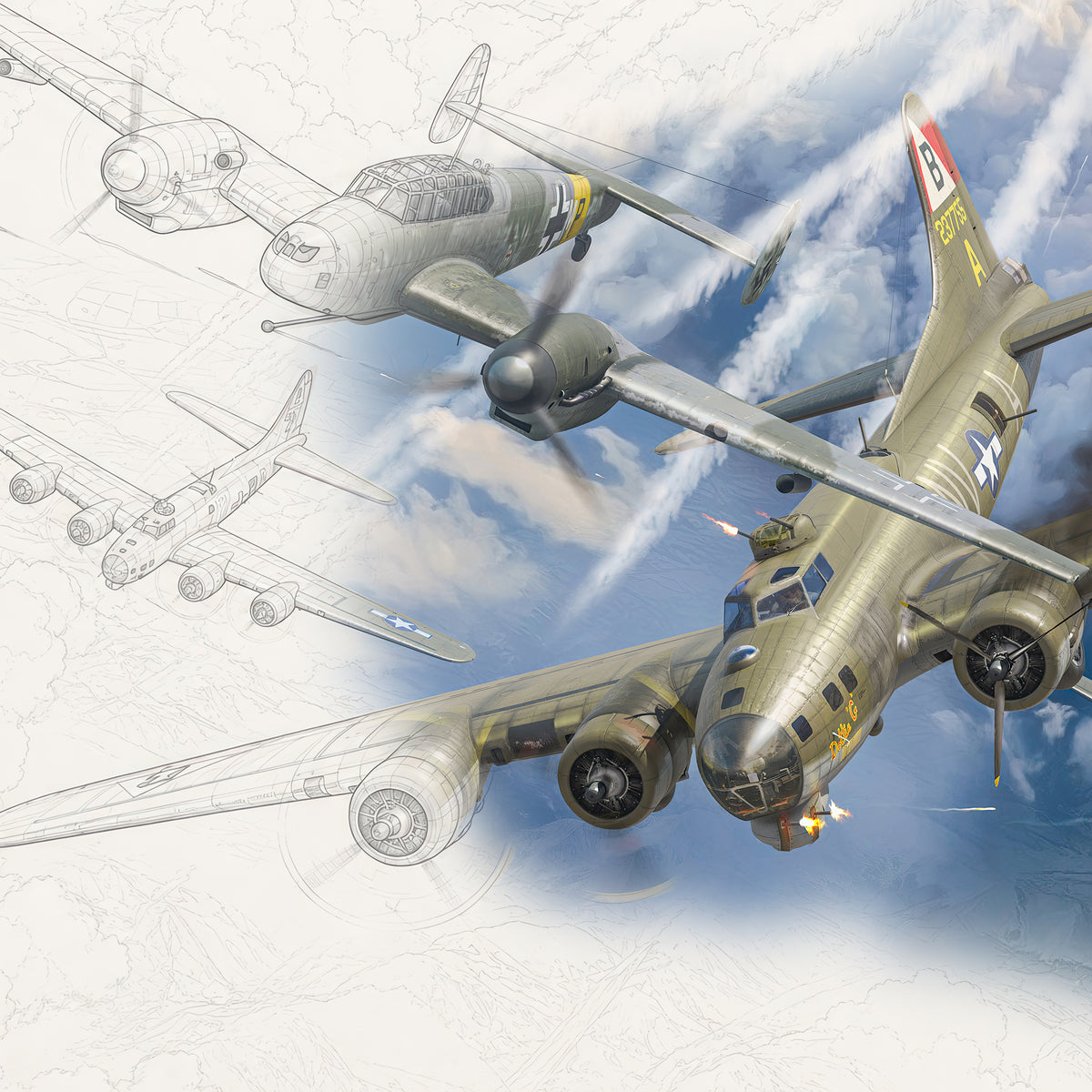
Once the history is understood, Craig begins constructing the scene.
Aircraft position, perspective, landscape, weather, lighting, weather reports, moon phase, and supporting elements are developed around the story rather than added simply for visual effect. The composition must communicate what is happening while remaining believable to someone familiar with the subject.
This is where historical information begins becoming visual storytelling.
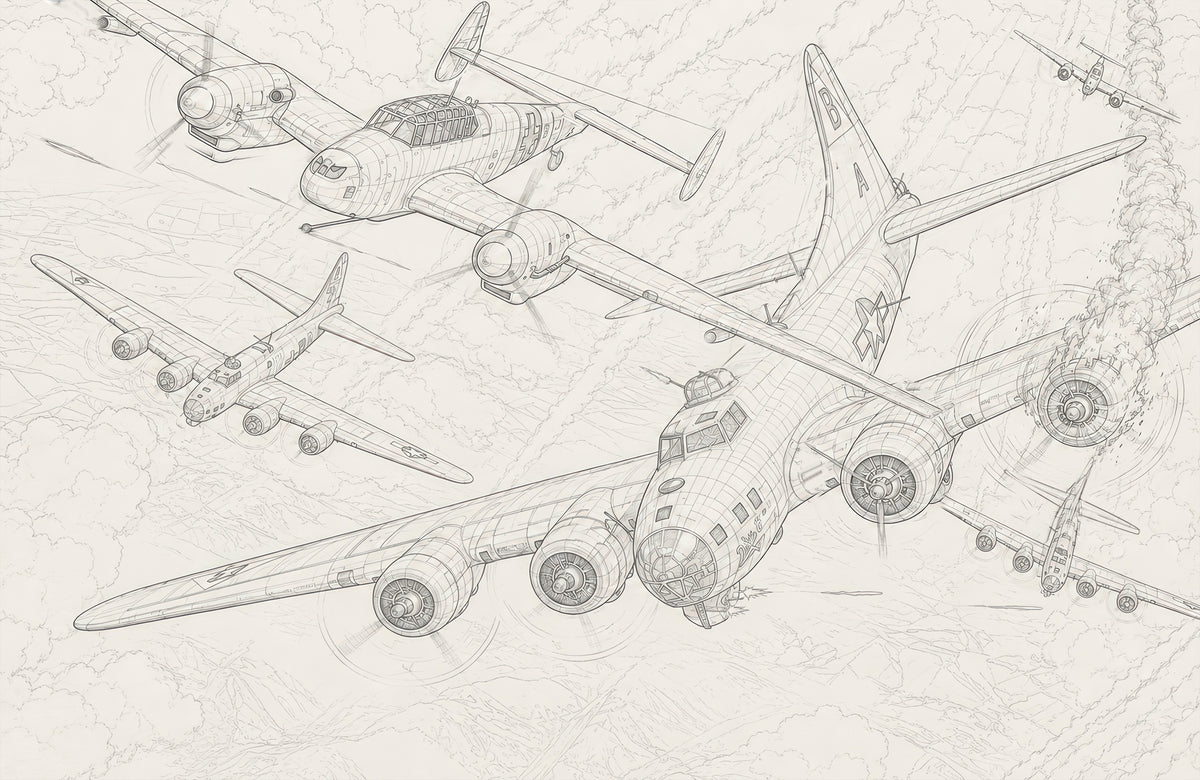
Watch the Artwork Take Shape

Accuracy Is Built Into the Artwork
Small details can completely change the historical accuracy of a scene.
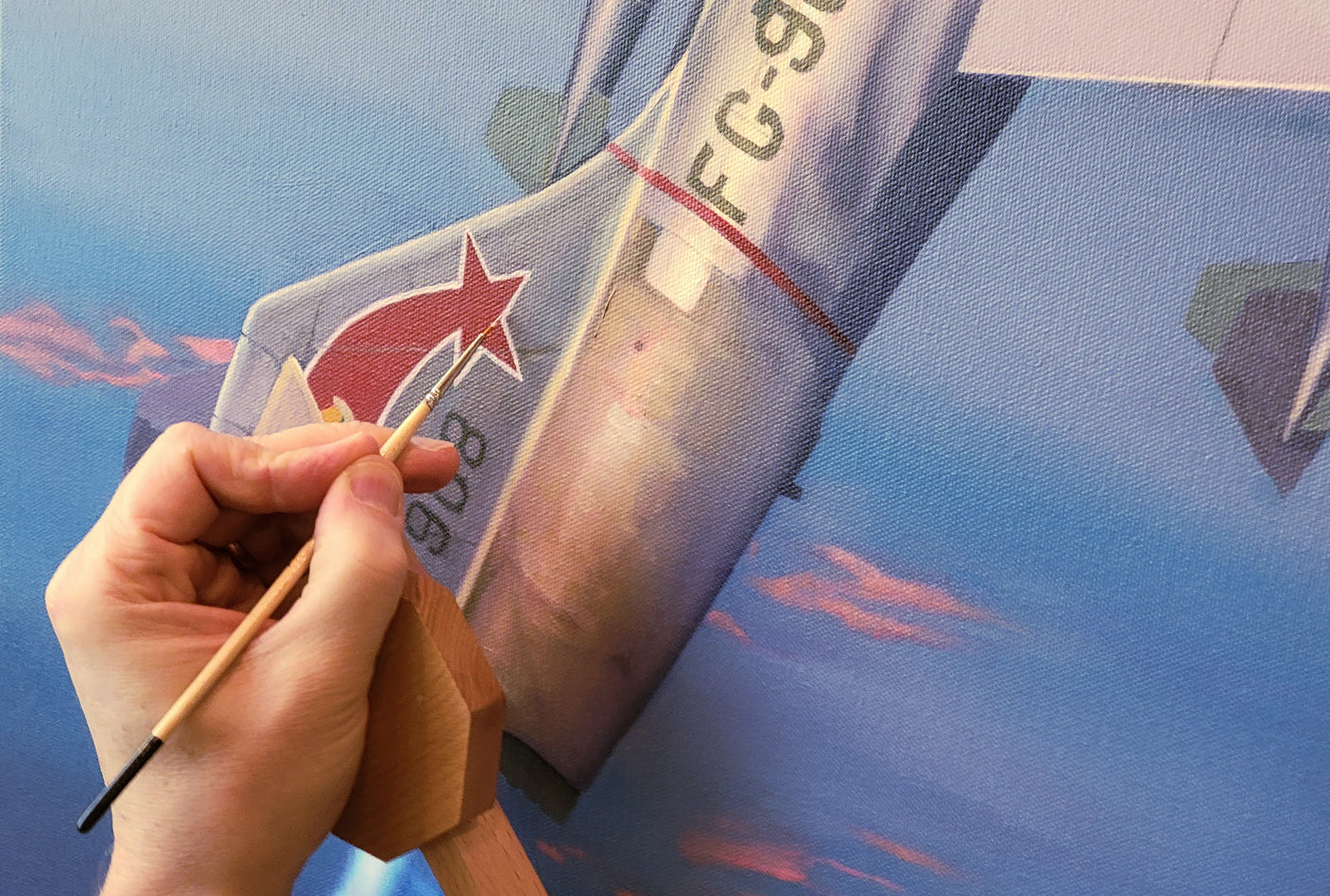
Configuration variants, camouflage, unit markings, serial numbers, weapons, antenna configurations, insignia, terrain, and even changes made to a combat weapon during its service life can matter.
Craig continually compares the developing artwork against available references, refining details until the finished piece represents the subject and story as faithfully as the surviving information allows.
Connecting the Artwork to the History
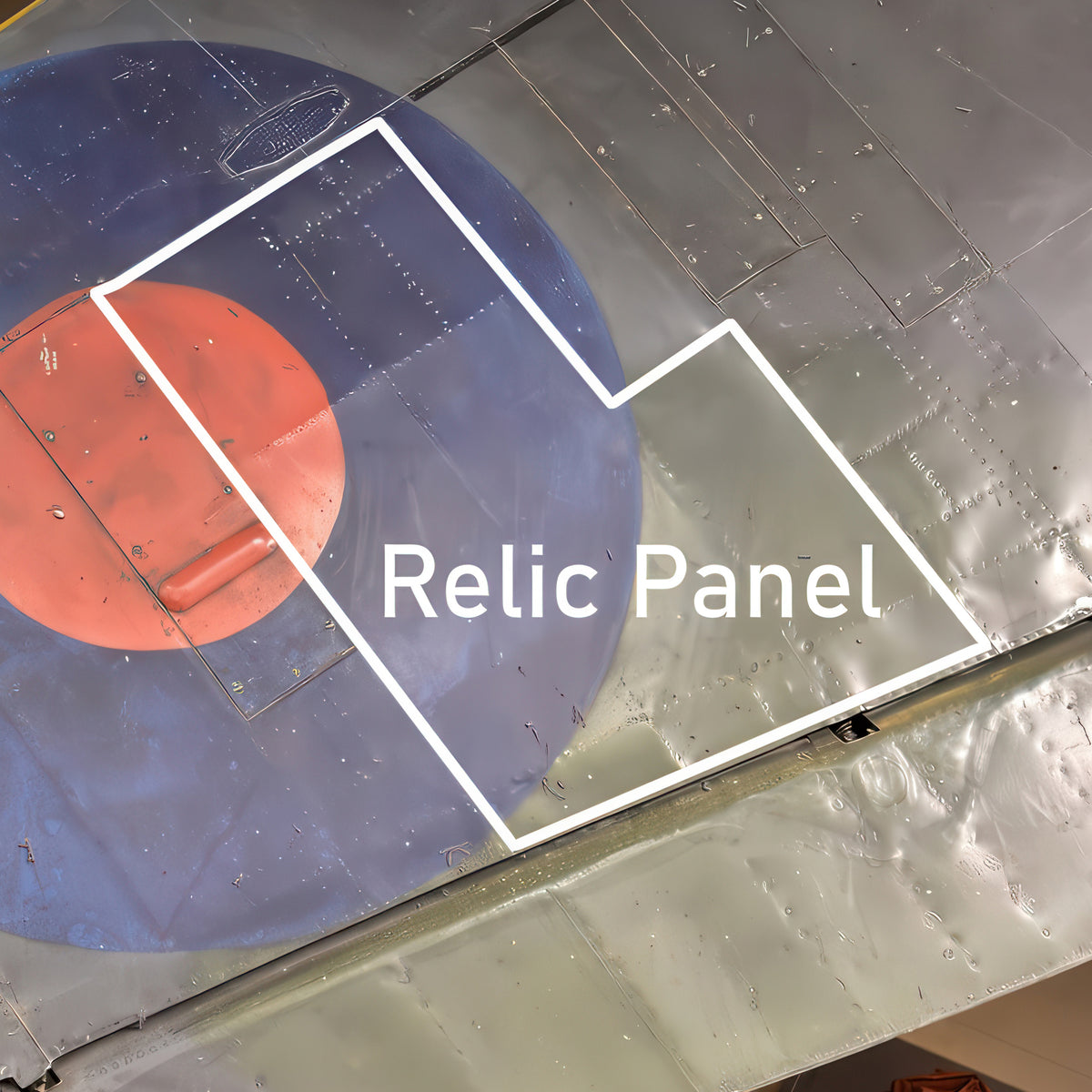
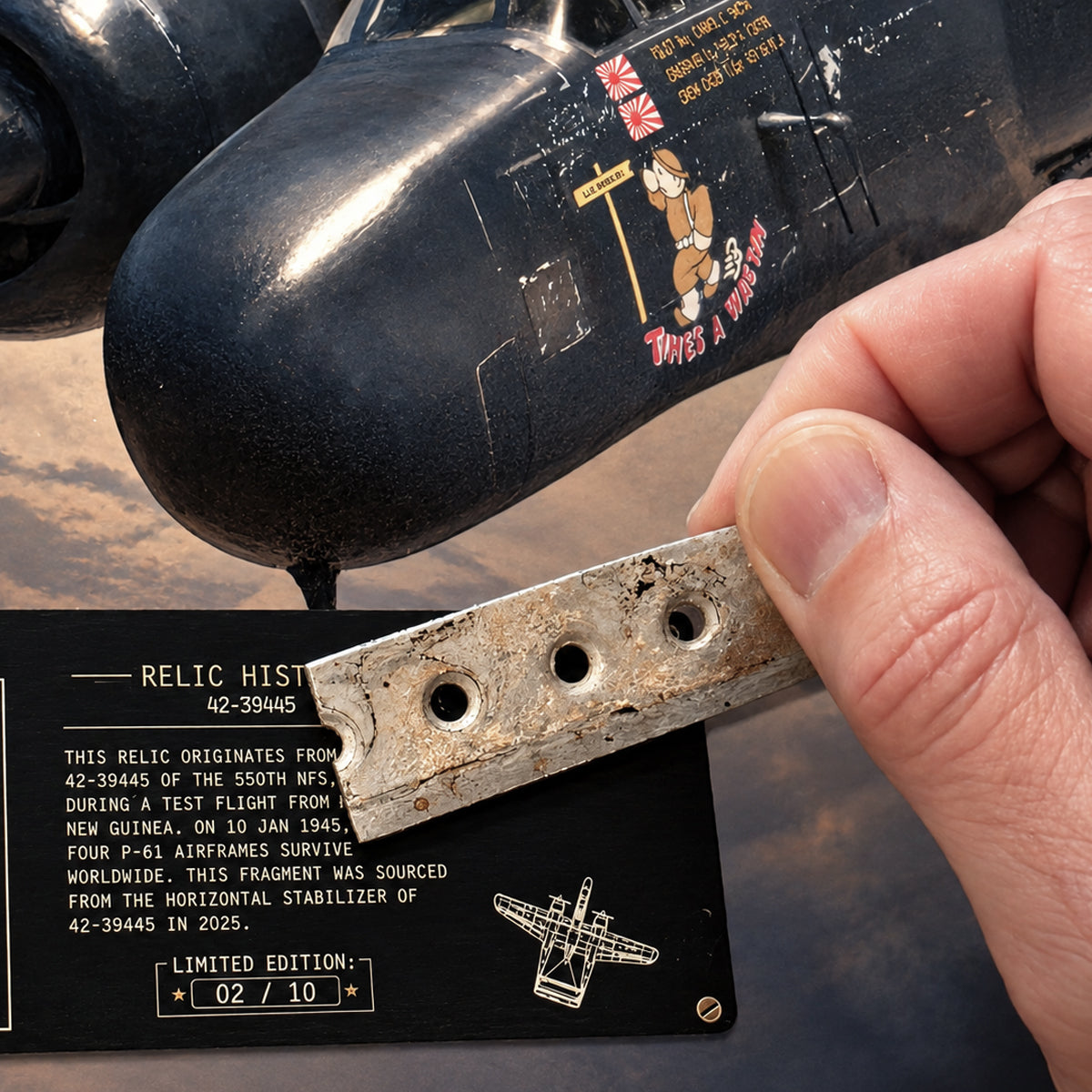
For many Aces In Action editions, the story continues beyond the illustration through an authentic artifact connected to the aircraft, ship, vehicle, or period represented.
These relics are sourced through museums, restoration projects, historical organizations, collectors, and other documented sources. Craig incorporates the artifact into the finished presentation so the collector isn't simply viewing history—they have a tangible piece of it.
Where provenance is available, the history and origin of the artifact become part of the finished collectible.
THE FINISHED WORK

Reconstructing Ira Kepford's legendary Corsair mission
Craig's Fighting 17 depicts VF-17 ace Ira “Ike” Kepford during his dramatic February 19, 1944 engagement in the Pacific. Research into the mission, Kepford's aircraft, squadron markings, and surviving historical accounts helped shape the scene, while an authentic fragment of F4U Corsair wing creates a physical connection to the aircraft represented in the artwork.

Accuracy informed by an SR-71 pilot
For Super Skater, Craig depicted SR-71A 61-7970 before the aircraft was lost during a 1970 refueling accident. During development of the artwork, legendary SR-71 pilot Maj. Brian Shul provided Craig with firsthand technical insight—including a detail concerning the Blackbird's expanding titanium skin and fuel leakage at high speed that artists frequently portray incorrectly.

Reconstructing a battle from 1812
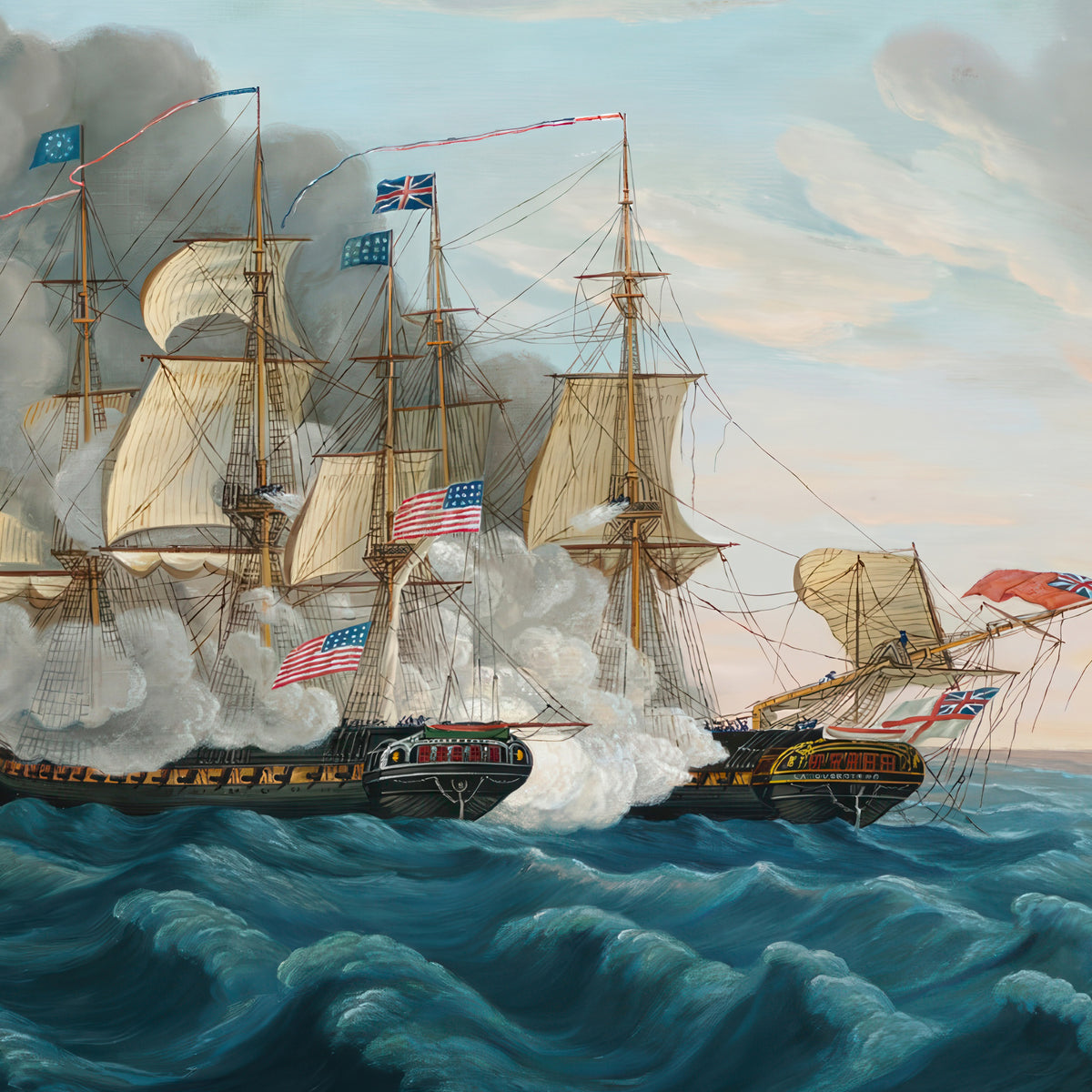
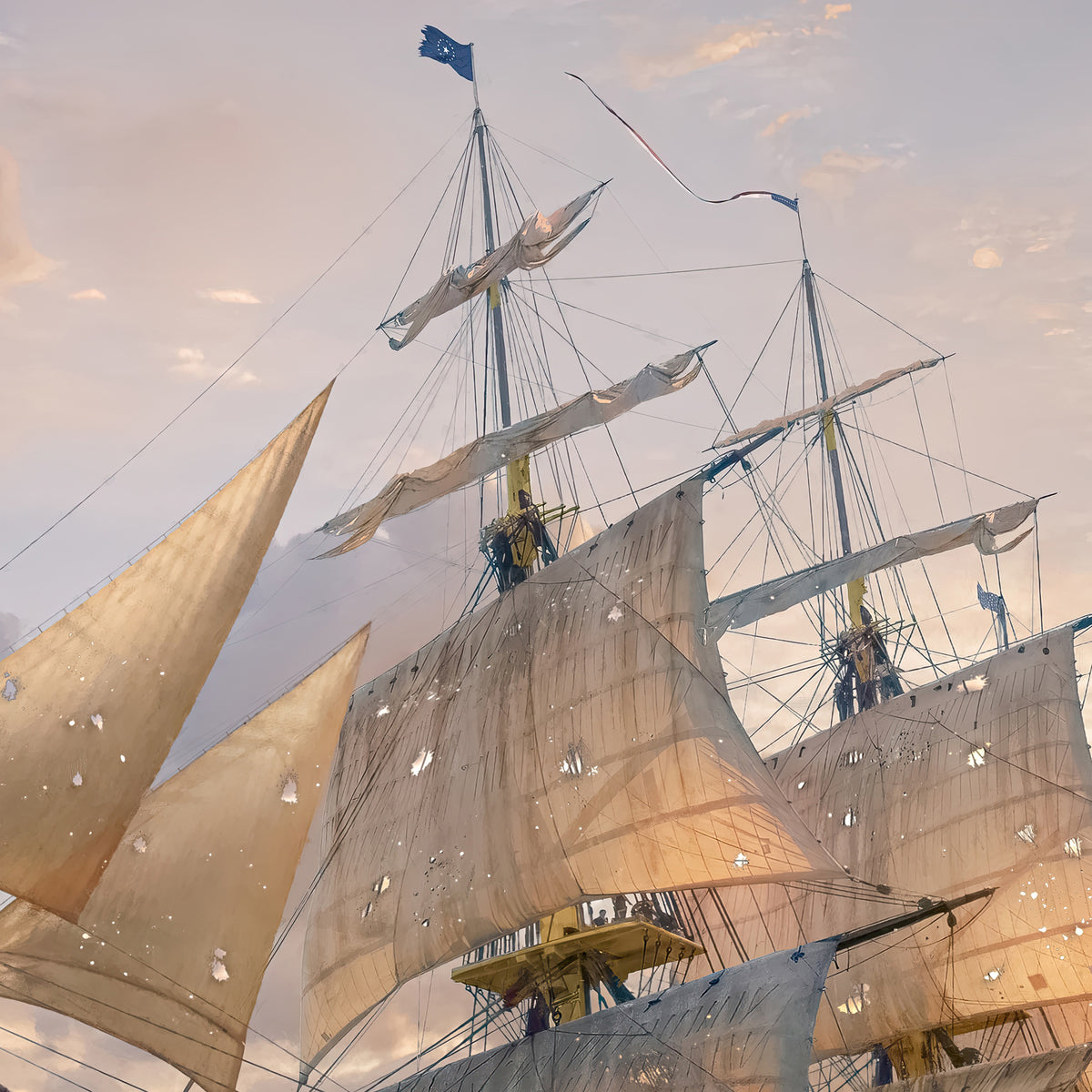
To recreate USS Constitution's battle with HMS Guerriere, Craig researched eyewitness accounts and period artwork—including paintings commissioned by Captain Isaac Hull after the victory. Those sources helped establish the ships' positioning, rigging, sail configuration, and Constitution's historically accurate yellow-ochre gun stripe. The finished relic edition incorporates original oak removed from the ship during her 1973–74 restoration.

Armored warfare brought into the collection
Panzer Ace expands Craig's work beyond aviation, depicting a King Tiger of the 503rd Heavy Panzer Battalion during the fighting around Budapest in late 1944. The piece demonstrates the same approach applied to armor: identifying the vehicle, unit, setting, and historical circumstances before constructing the finished scene.

Preserving the story of a Cold War supercarrier
Craig's depiction of USS Kitty Hawk presents the carrier during her Cold War service and connects the illustration directly to the surviving ship. Material incorporated into the relic edition came from the carrier's double-bottom hull and was provided to Aces In Action by the contractor responsible for dismantling Kitty Hawk in Brownsville, Texas.

Finding the human story behind an iconic aircraft
Rather than depicting another B-17 combat mission, Craig chose a deeply personal moment in the Memphis Belle story—her arrival in Memphis during the 1943 War Bond Tour, where Margaret Polk saw the aircraft named for her hometown for the first time. The relic edition carries that history further with original tire material preserved during earlier restoration efforts.
Every Piece of Art Has a Story
Discover Craig Tinder's historical artwork and explore the research, artifacts, and stories behind the collection.