
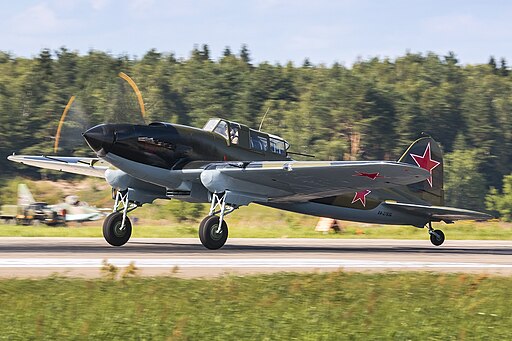
The Ilyushin Il-2 was built for one demanding purpose: attacking enemy forces close to the battlefield while surviving intense ground fire. Produced in enormous numbers, the Soviet ground-attack aircraft became one of the most recognizable weapons of the Eastern Front.
An Armored Attack Aircraft
The Il-2's defining feature was its armored structure. Armor protected critical areas around the engine and cockpit and formed an integral part of the aircraft rather than simply being added as separate plates. This helped the aircraft survive damage encountered during low-altitude attacks, although no aircraft operating in that environment was invulnerable.
Weapons for Ground Attack
Il-2 armament varied by version and could include machine guns, cannon, bombs and rockets. Its targets included vehicles, artillery positions, troop concentrations and other battlefield objectives. The aircraft's effectiveness depended on tactics, pilot experience and the type of target; the popular image of the Il-2 as a simple “tank killer” understates the broader ground-support role it performed.
Evolution During the War
Early production Il-2s were single-seat aircraft, but combat experience highlighted their vulnerability to attacks from behind. A rear gunner was subsequently added, producing the familiar two-seat configuration used in large numbers later in the war.
The “Flying Tank”
The nickname “Flying Tank” reflects the Il-2's reputation for armor and battlefield durability, not its classification. It was an aircraft—specifically a dedicated ground-attack type—and became a central component of Soviet tactical aviation as the Red Army pushed westward toward Germany.

Share: