
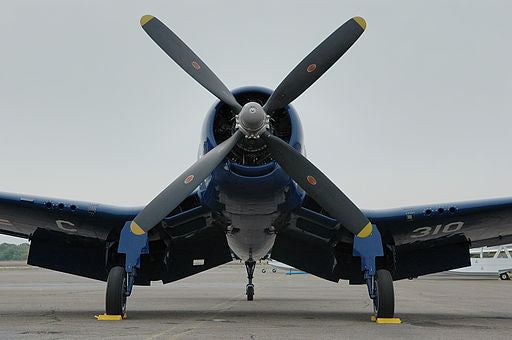
The tapestry of aviation history is woven with tales of daring dogfights, technological marvels, and unexpected encounters. Among the stories that resonate with enthusiasts is whether an F4U Corsair, an icon of World War II, ever shot down the post-war, jet-powered MiG-15. It’s a tantalizing tale that’s had both history nerds and plane enthusiasts buzzing. Let’s roll up our sleeves and dig into the history books to see if there’s any truth to this fascinating story.
The Corsair in Context
Born during the intense demands of the Second World War, the Chance Vought F4U Corsair was an engineering marvel. Characterized by its distinctive inverted gull wing, the Corsair was a carrier-based fighter feared by its adversaries. Serving primarily in the Pacific theater, the F4U played a crucial role in turning the tide against Japanese air superiority. By the end of World War II, the Corsair had firmly etched its reputation as a lethal bird of prey, having downed 2,140 enemy aircraft.
The MiG-15 Emerges
Jump to the early 1950s, and the MiG-15 makes its grand entrance out of nowhere, showcasing just how far airplane tech had come in a short time. This sleek Soviet jet, with its fancy swept-back wings and roaring engine, not only dropped jaws in the West but also shook up the whole dogfighting game. Predominantly during the Korean War, the MiG-15 tangled with America’s best, including the F-86 Sabre, creating dogfight legends that are discussed to this day.
 Own a Piece of a Corsair
When Titans Meet
Given their respective timelines, the notion of a Corsair engaging a MiG-15 might seem like a stretch. But history often surprises us. The F4U, despite being a product of the previous war, did indeed see service during the early years of the Korean War. Notably, it was during this overlapping service that a particular incident allegedly occurred.
In September 1952, Marine Captain Jesse Folmar, piloting an F4U Corsair, found himself in a desperate dogfight with a MiG-15 over the Korean skies. While the jet boasted superior speed and altitude capabilities, the Corsair’s nimbleness and low-speed maneuverability became its ace in the hole. According to accounts, Folmar fired short bursts from his .50 caliber machine guns, landing hits on the MiG. Defying the odds, the MiG spiraled down, making Folmar the only Corsair pilot credited with downing a jet-powered MiG.
Skepticism and Confirmation
As with many accounts from the fog of war, skepticism persisted. Could a World War II piston-engine aircraft genuinely defeat a technologically superior jet fighter? Several elements come into play: the pilot’s skill, the dynamic unpredictability of dogfights, and the underestimation of the Corsair’s capabilities. The U.S. military did confirm Folmar’s kill, and while it remains an outlier in air combat, it stands as a testament to the unpredictable nature of aerial warfare.
In the history of air combat, where tales of daring often border on the unbelievable, the Corsair’s alleged takedown of a MiG-15 is a vivid reminder that technology, while transformative, is only one piece of the puzzle. The interplay of skill, circumstance, and, sometimes, sheer luck can craft stories that defy the odds. The F4U Corsair, a relic of a bygone era, facing off against the MiG-15, an embodiment of the future, underscores the age-old adage: never underestimate the underdog.


Share: