
HISTORICAL PAPER ART BY CRAIG TINDER
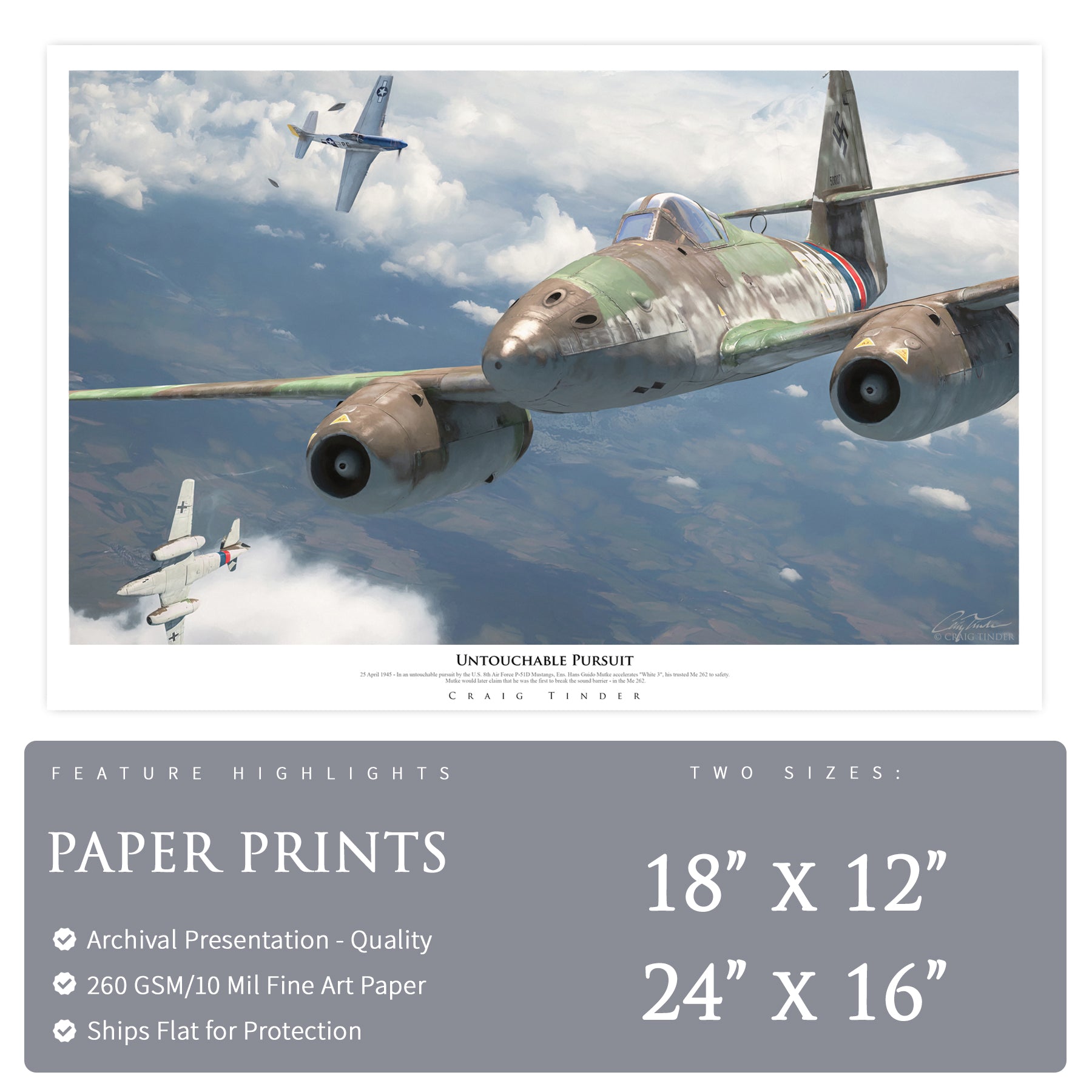
Me 262 Swallow - Untouchable Pursuit Art Print
Pairs well with
Archival-quality print · Craig Tinder artwork · Made in the USA
Me 262 Swallow - Untouchable Pursuit Art Print
If you have any questions, you are always welcome to contact us. We'll get back to you as soon as possible, within 24 hours on weekdays.
-
Shipping Information
Use this text to answer questions in as much detail as possible for your customers.
-
Customer Support
Use this text to answer questions in as much detail as possible for your customers.
-
FAQ’s
Use this text to answer questions in as much detail as possible for your customers.
-
Contact Us
Use this text to answer questions in as much detail as possible for your customers.
ABOUT THE ARTWORK
PRINT DETAILS
ABOUT THE PRINT
Each In Action Print is professionally produced using archival-quality inks on premium fine-art paper selected for excellent detail, color reproduction, and longevity. The larger scene format preserves the atmosphere, historical details, and storytelling of Craig Tinder's original artwork.
AVAILABLE SIZES
- 18" × 12" (45.7 × 30.5 cm)
- 24" × 16" (61 × 40.6 cm)
FRAMING & PRODUCTION
Prints are sold unframed and are sized to fit widely available ready-made frames and mats, eliminating the need for custom framing in most cases. Each print is produced to order; please allow approximately 2–3 business days for production before shipment.
ABOUT CRAIG TINDER
Craig Tinder is an artist and historical researcher whose work brings significant moments in military and aviation history to life. For more than 20 years, he has combined detailed research with traditional and digital illustration techniques to create historically accurate artwork for collectors, veterans, museums, and historical organizations.
Craig has been commissioned to create artwork, installations, and memorial projects for museums, military organizations, and historical institutions throughout the United States. His work is held in museum and private collections around the world, reflecting a career built around historical accuracy, craftsmanship, and preserving the stories behind the subjects he depicts.
Every Aces In Action artwork is created by Craig Tinder, making Aces In Action the official home of his historical artwork and collectibles.
Meet Craig Tinder →
SHIPPING & CARE
SHIPPING
Each print is produced to order and carefully packaged for shipment. Please allow approximately 2–3 business days for production before your order ships. Delivery times vary by destination and shipping method.
International orders are welcome. Customers outside the United States are responsible for any applicable customs duties, taxes, or import fees.
CARE
For long-term display, keep your print away from prolonged direct sunlight, excessive moisture, and high humidity. When framing, archival-quality mats and framing materials are recommended to help protect the artwork over time.
Need help with your order? Contact Us →
IN ACTION PRINT EXPERIENCE

Framed Display Example
Rich in historical detail and atmosphere, In Action Prints turn Craig Tinder's full-scene artwork into a striking framed display.

Created by Artist Craig Tinder
Each print begins with Craig Tinder's original historically researched artwork.

Print Size Reference
Compare available print sizes and see their approximate scale.