
AUTHENTIC RELIC ARTWORK BY CRAIG TINDER
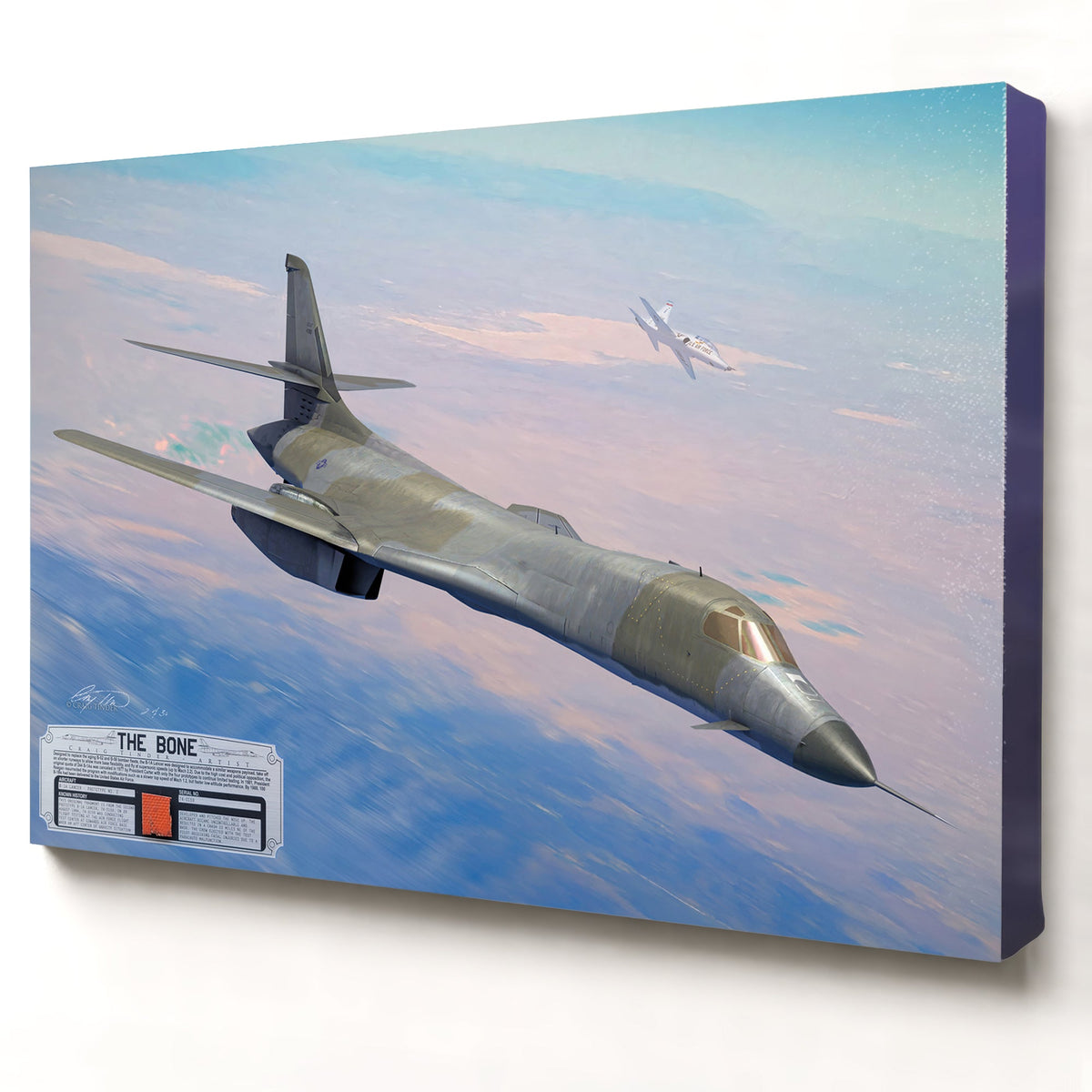
B-1 Lancer - The Bone | INCLUDES: B-1A Relic
Pairs well with
Authentic historical relic · Signed & numbered by Craig Tinder · Certificate of Authenticity included
B-1 Lancer - The Bone | INCLUDES: B-1A Relic
STORY BEHIND THE ARTWORK
ABOUT THE RELIC
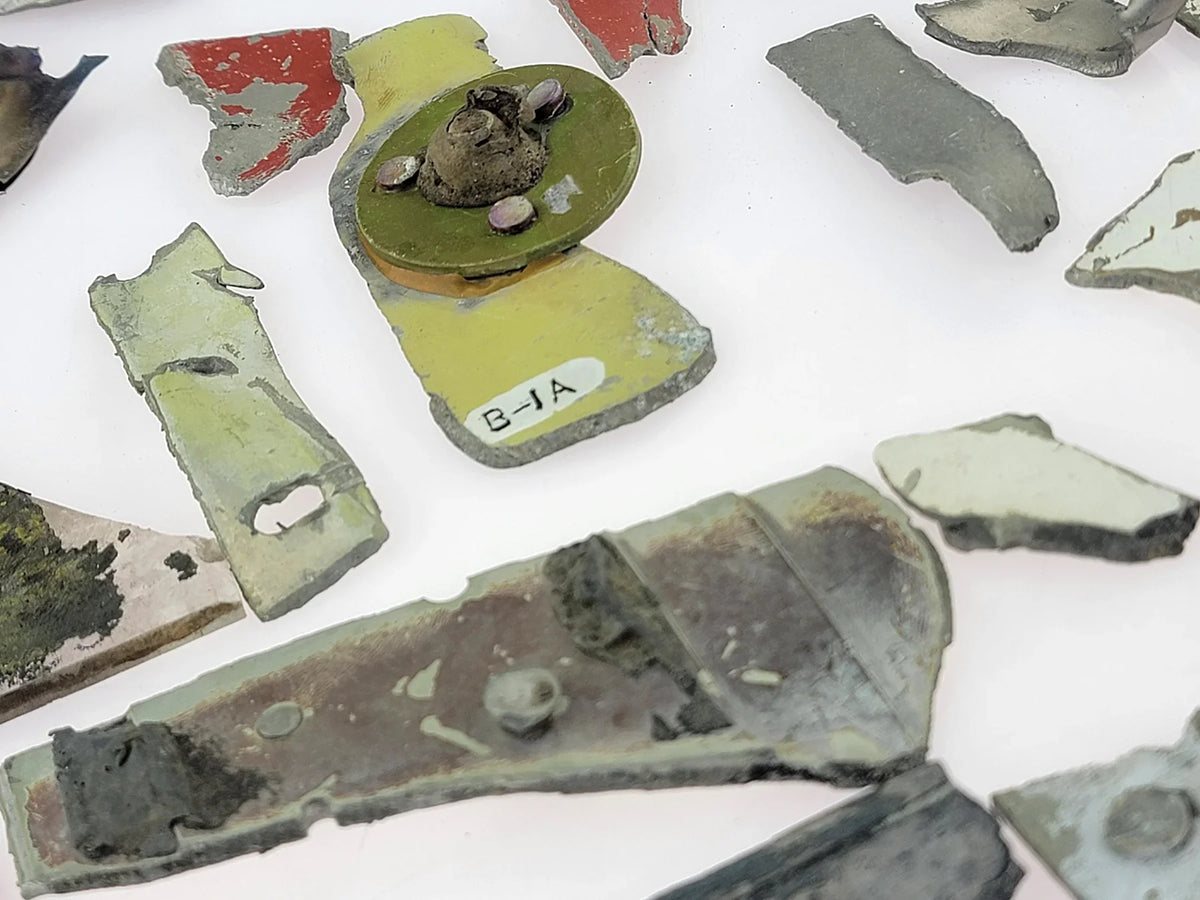
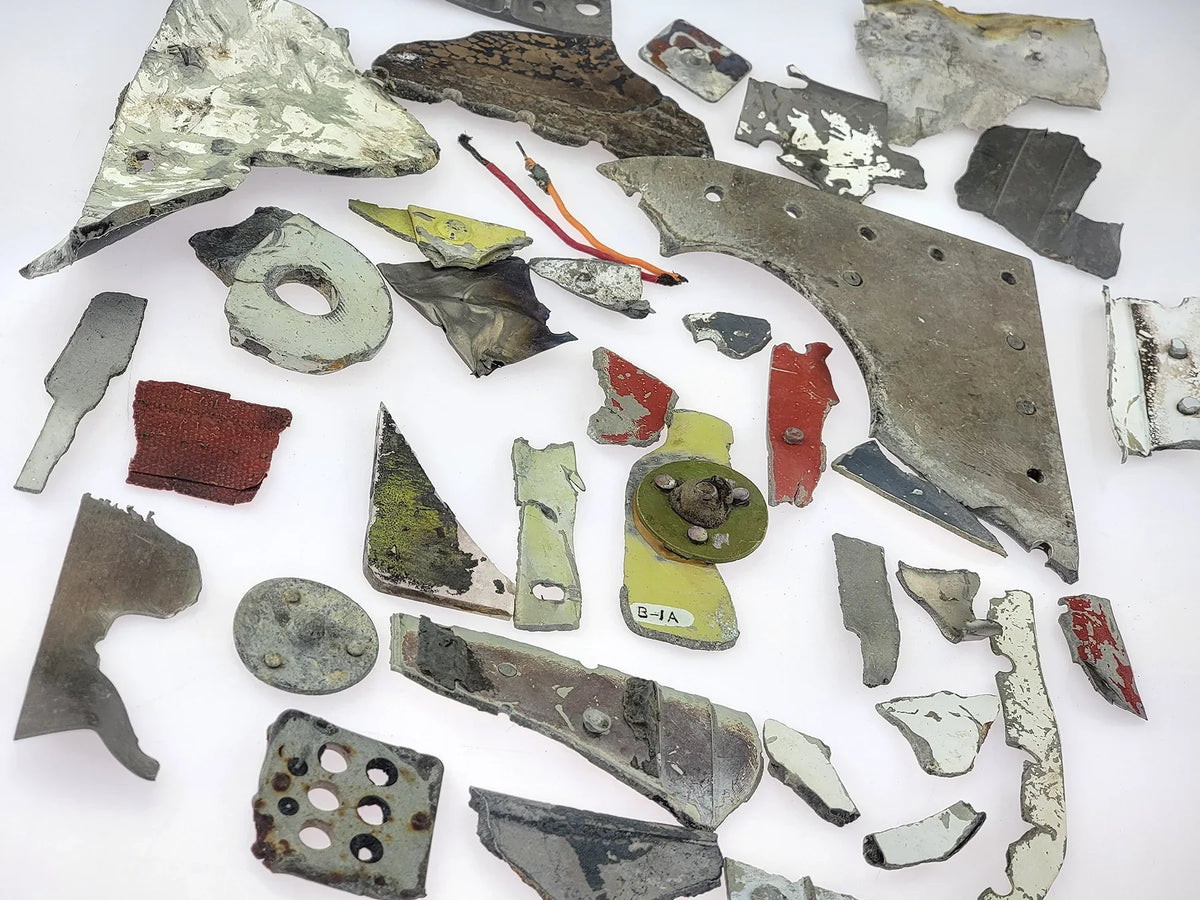
This relic originates from the second prototype of the B-1A Lancer, serial number 74-0159. On 29 August 1984, during flight testing at the Air Force Flight Test Center at Edwards Air Force Base, a critical issue developed that led to a tragic crash. While conducting tests, the aircraft experienced an aft center of gravity situation that caused the nose to pitch up uncontrollably. The flight crew attempted to recover the aircraft, but it became irretrievable, leading to a crash 22 miles northeast of the base. Fragments of the B-1 Lancer used as relics in "The Bone" limited edition prints
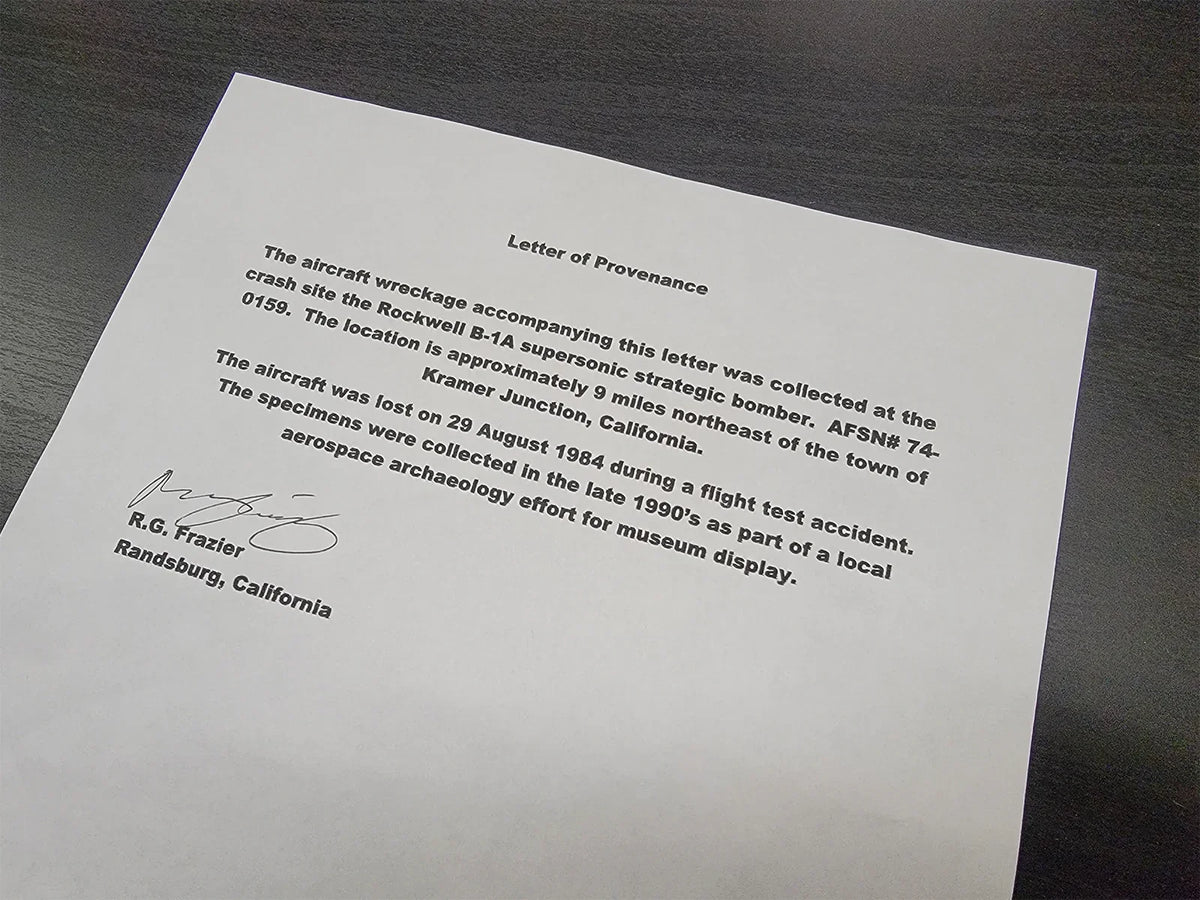
These relics from the crash site have never been part of the broader collector's market and were sourced directly from the location by the G. Frazier collection. The B-1A Lancer program played a key role in the development of supersonic strategic bombers, with the B-1A evolving into the more widely known B-1B, which became a critical asset for the U.S. Air Force in the following decades. This piece of aviation history is a reminder of the risks taken during the advancement of military aviation technology. Fragments of the B-1 Lancer used as relics in "The Bone" limited edition prints
 Letter of Provenance - R.G. Frazier
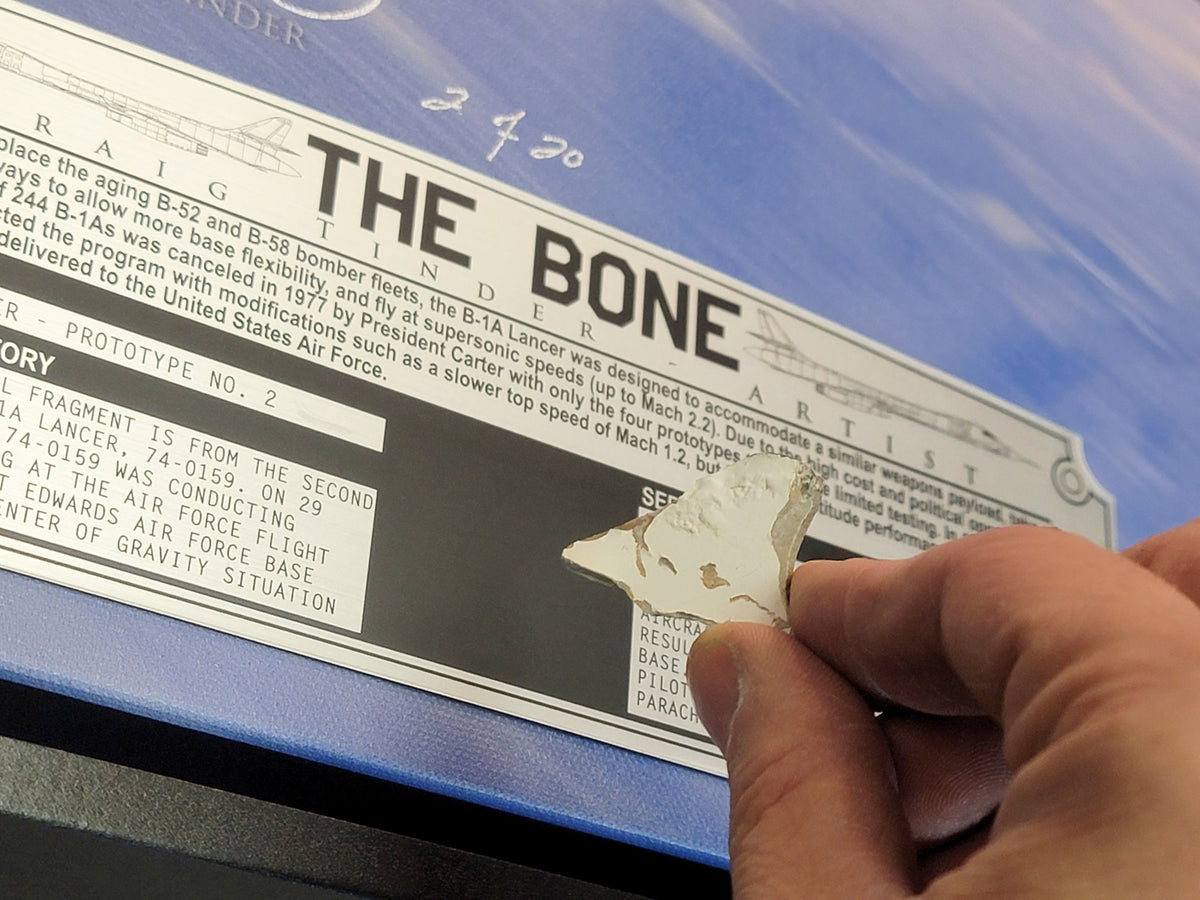
 Relic fragment being prepared for the canvas
MATERIAL & DISPLAY
HERITAGE ALLOY™
Heritage Alloy™ is the next generation of Aces In Action Relic Artwork. Made from a rigid aluminum composite material, its smooth surface delivers exceptional color, contrast, and fine detail with a luminous quality that is difficult to fully capture in photographs.
Each Heritage Alloy™ edition incorporates our exclusive engraved-metal, Artifact Dock™, integrating the authentic historical relic, its provenance, and limited-edition identification directly into the artwork. Available Ready to Hang or finished in a solid black wood frame.
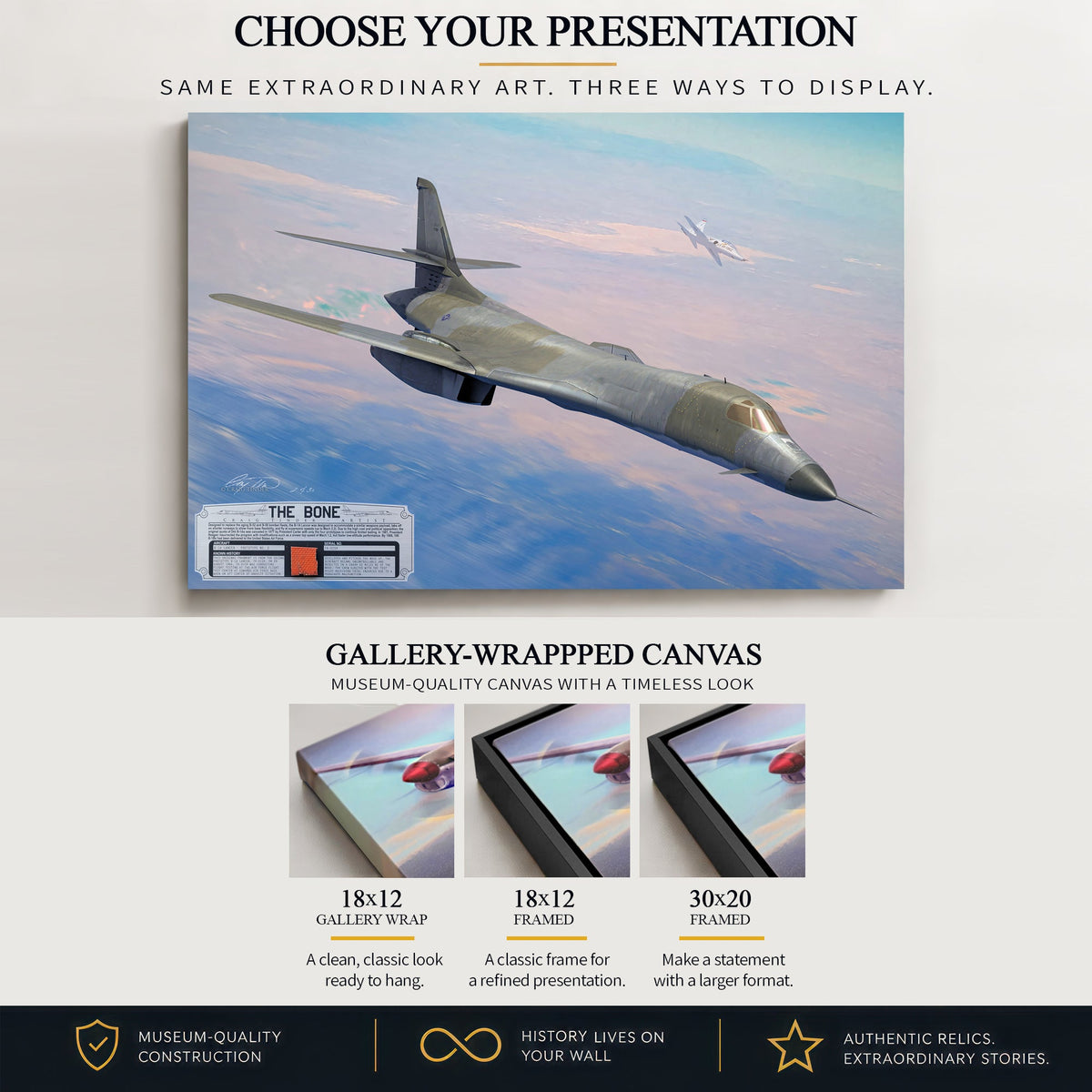
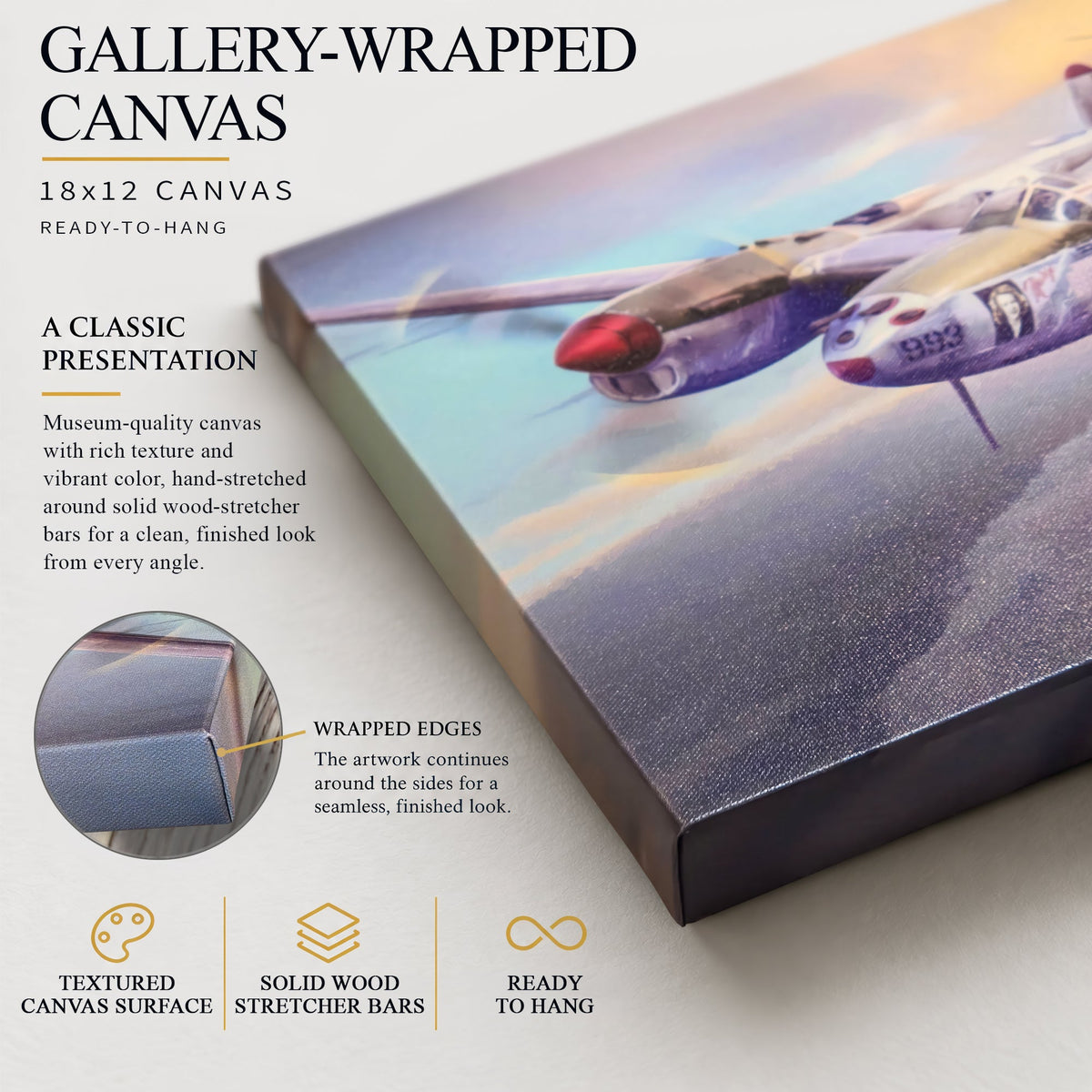
GALLERY-WRAPPED CANVAS
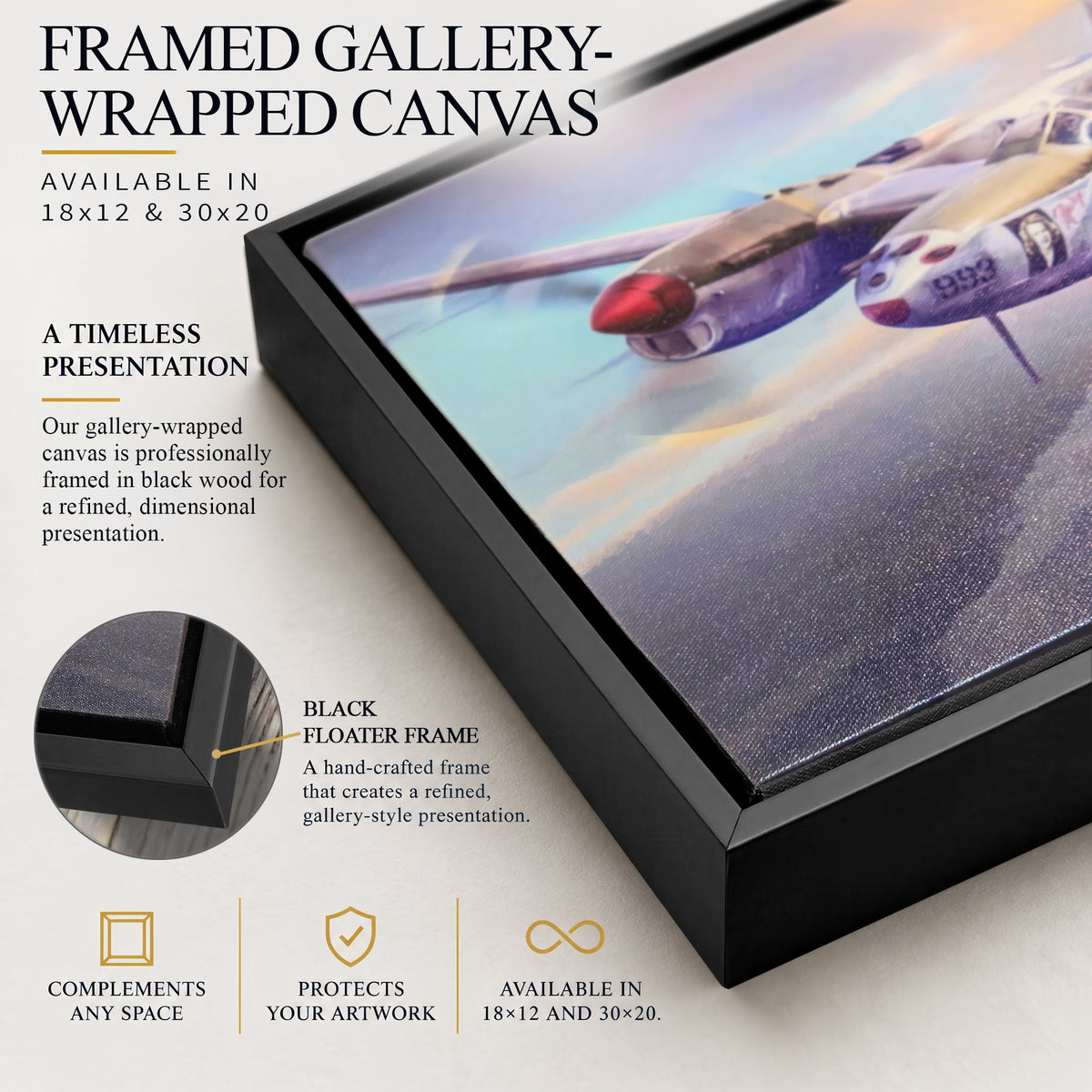
Select Relic Artwork editions remain available on our traditional gallery-wrapped canvas while inventory lasts. Canvas provides a classic, textured fine-art presentation and is available Ready to Hang or finished in our traditional black floater frame.
AVAILABLE SIZES & FORMATS
Depending on the artwork and edition, available formats may include:
- 18" × 12" (45.7 × 30.5 cm) — Heritage Alloy™ or Gallery-Wrapped Canvas; Ready to Hang or Framed
- 30" × 20" (76.2 × 50.8 cm) — Heritage Alloy™ or Gallery-Wrapped Canvas; Framed
- Custom sizes may be available upon request
Please refer to the product selections above for the specific materials, sizes, and framing options currently available for this artwork.
READY TO HANG
Every Relic Artwork edition arrives ready for display. 18" × 12" Heritage Alloy™ Ready-to-Hang editions include an installed rear wall-mount bracket, while Gallery-Wrapped Canvas editions arrive ready to hang without an external frame. Framed editions include installed hanging hardware. No additional framing or mounting is required before display.
RELIC MATERIAL & VARIATION
Unless otherwise stated, the relic included with your artwork is a fragment taken from the larger historical component shown in the reference photos. The size, shape, color, markings, and appearance of each relic may vary based on the original material available. Reference photos are provided to document and illustrate the source of the relic material and may not depict the exact fragment included with your artwork.
ABOUT CRAIG TINDER
ARTIST • HISTORIAN • RELIC CURATOR
Craig Tinder has spent more than two decades creating historically researched artwork that connects collectors with the people, machines, and events that shaped history. His work goes far beyond illustrating an aircraft, ship, or vehicle—the research and historical artifacts behind each piece are an integral part of the artwork.
Craig works with museums, aircraft and vehicle restoration organizations, veterans, historians, collectors, and other historical institutions around the world to locate and document authentic artifacts with meaningful connections to the subjects he depicts. He supplements this physical evidence with extensive research using museum collections, military records, historical photographs, archives, and other primary and secondary sources from around the world.
In his workshop, Craig carefully prepares and incorporates these genuine historical relics into his signed and numbered artwork, preserving their provenance while giving artifacts that might otherwise remain unseen a new way to tell their story.
Meet Craig Tinder →
SHIPPING & CARE
SHIPPING
Each Relic Artwork edition is individually handcrafted and completed by Craig Tinder. From engraving and assembling the Artifact Dock to preparing the relic, framing the artwork when selected, and completing the final inspection and packaging, every piece is finished specifically for its collector. Please allow additional time for this hands-on process before your artwork ships.
Gift wrapping is available for Relic Artwork, making it ready for presentation upon arrival.
DISPLAY & CARE
All Relic Artwork arrives ready to display. Unframed 18" × 12" editions include a rear wall-mount bracket, while framed editions arrive with hanging hardware installed.
Premium Relic Artwork editions are designed for long-term display. Keep artwork away from prolonged direct sunlight, excessive moisture, and extreme temperature changes. Dust gently with a clean, soft, dry cloth and avoid household cleaners or abrasive materials on the artwork, frame, relic, or Artifact Dock.
ACES IN ACTION JOURNAL
Explore Further
Discover the people, missions, machines and events behind this artwork with the complete story in the Aces In Action Journal.
B-1A 74-0159: The Test Program Behind the B-1 Lancer
Read the Full StoryTHE RELIC ARTWORK EXPERIENCE

Authentic History
Each edition incorporates an authentic historical relic, presented on a custom laser-engraved Artifact Dock with details connecting the artifact to its history.
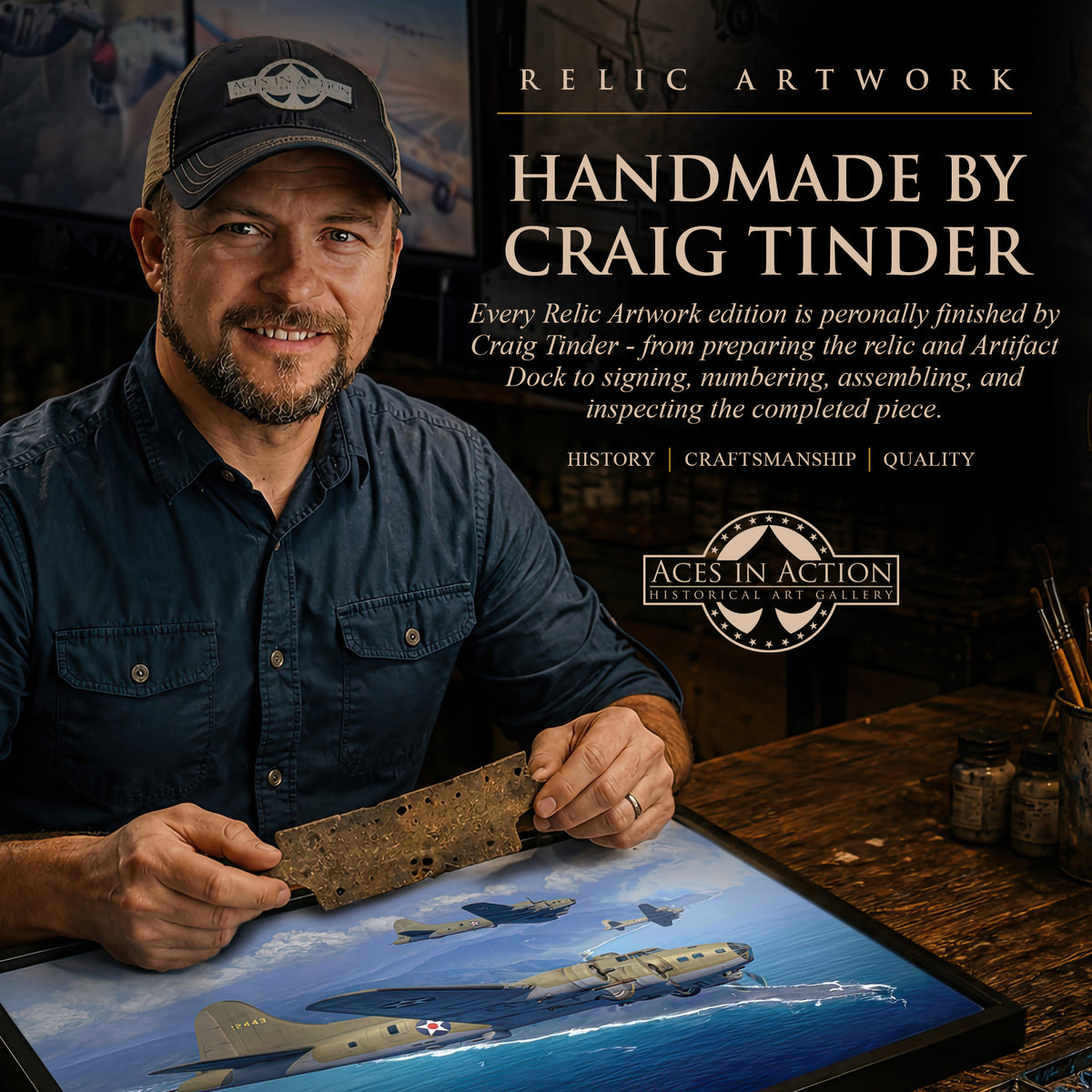
Handmade by Craig Tinder
Every Relic Artwork edition is assembled in Craig's studio, where it is signed, numbered, crafted, inspected, and prepared for its collector.

Made for Collectors
From the Certificate of Authenticity to the finished presentation, each detail is designed to create a collectible that preserves a tangible connection to history.