


ABOUT THE ARTWORK

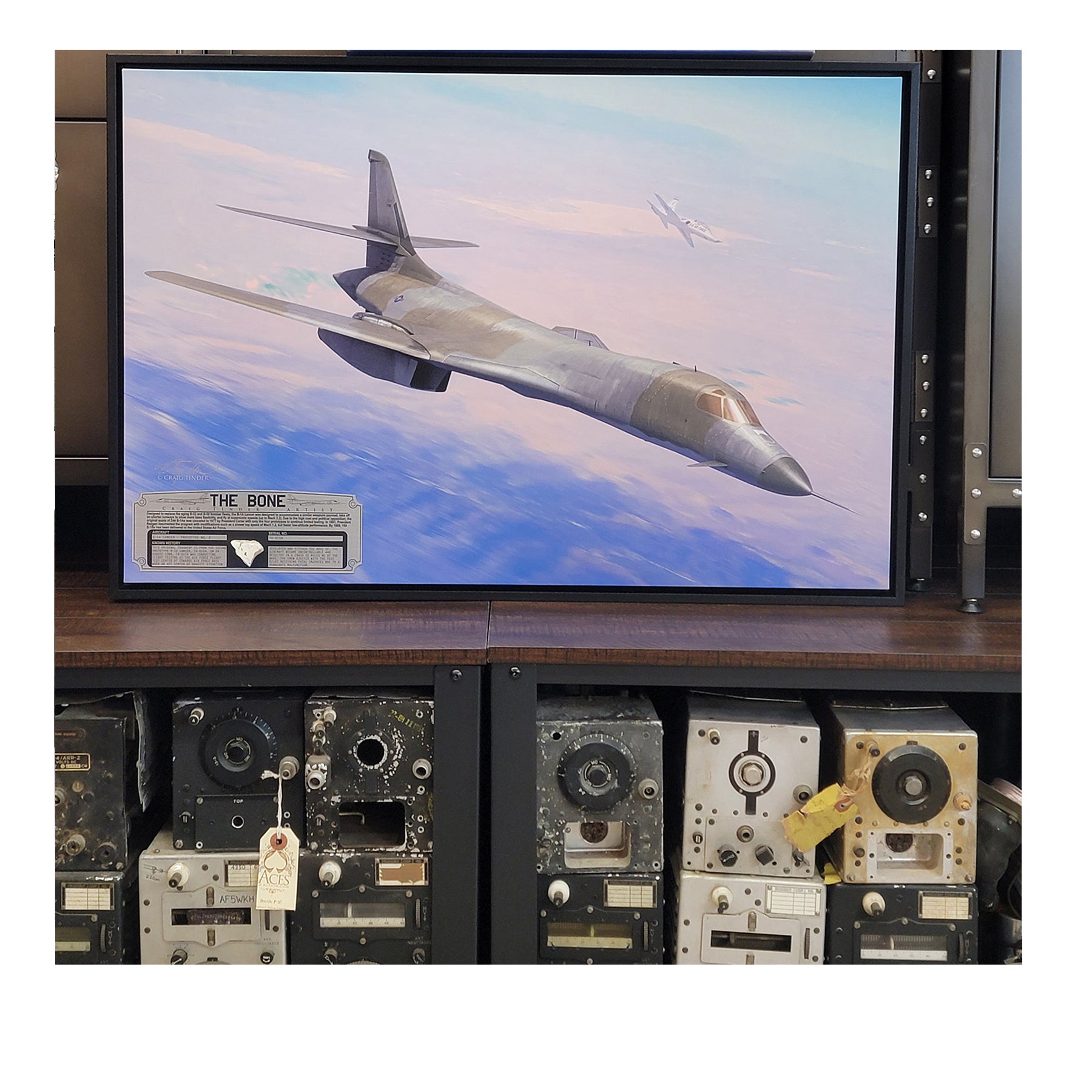
"The Bone" by Artist Craig Tinder

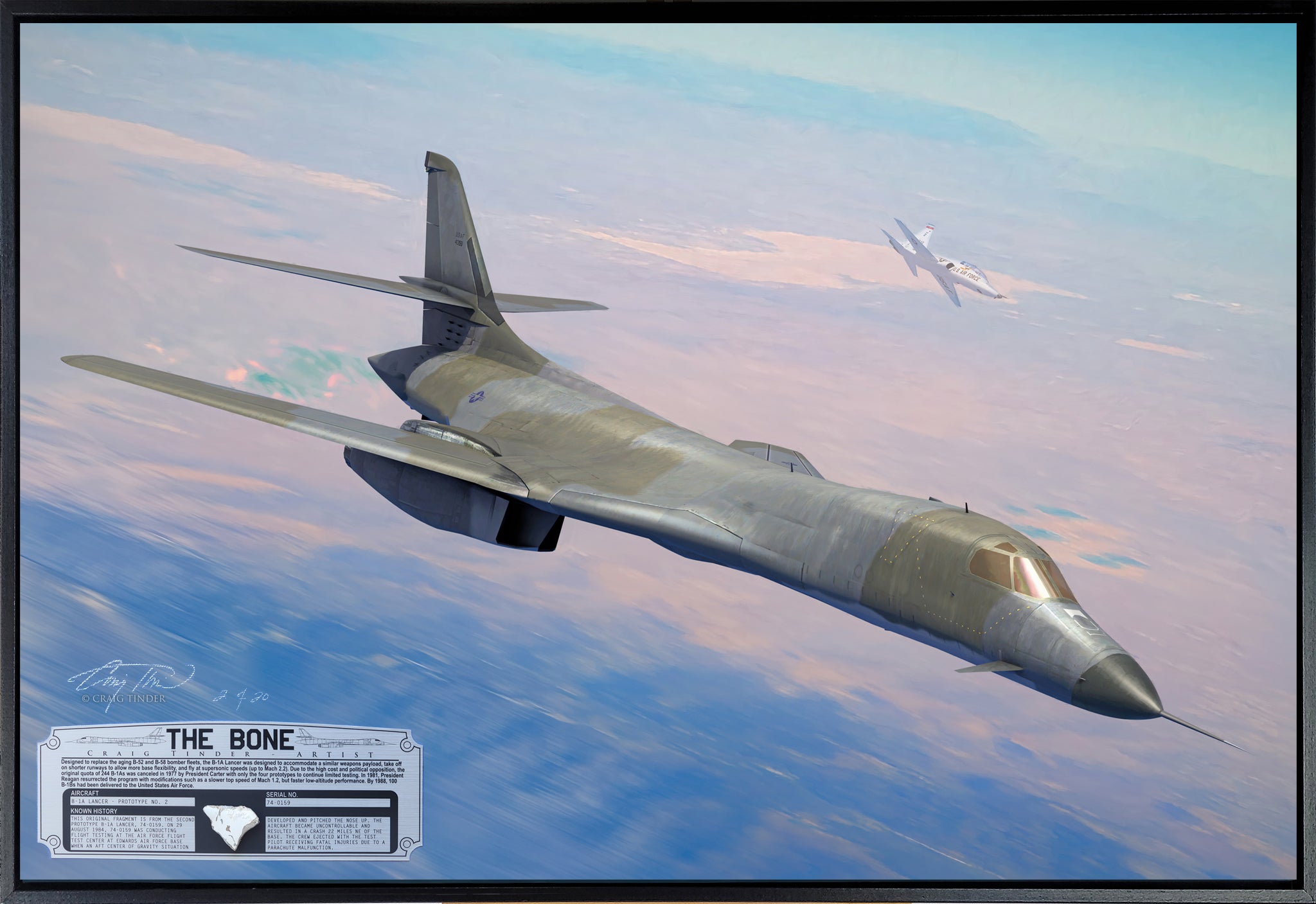
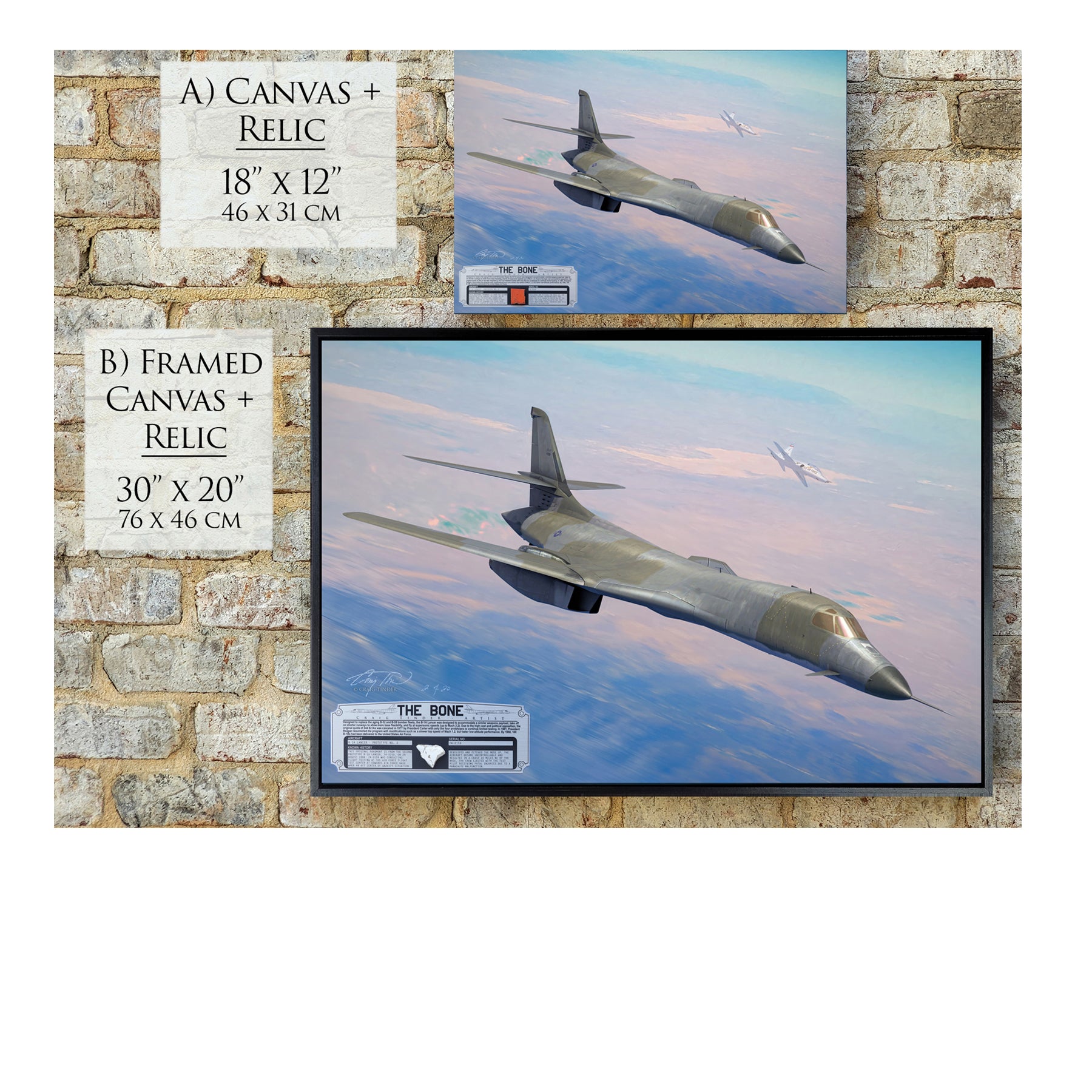
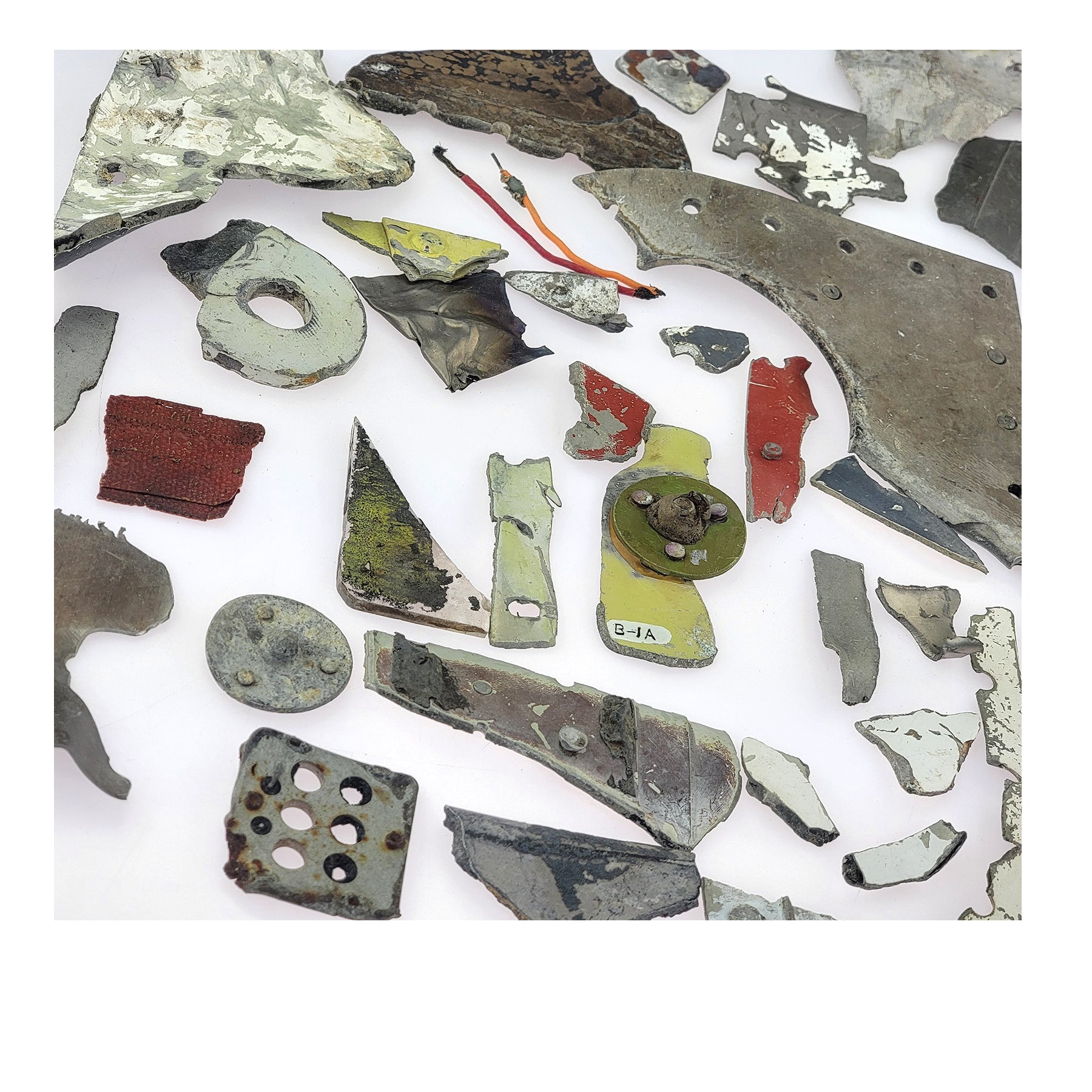
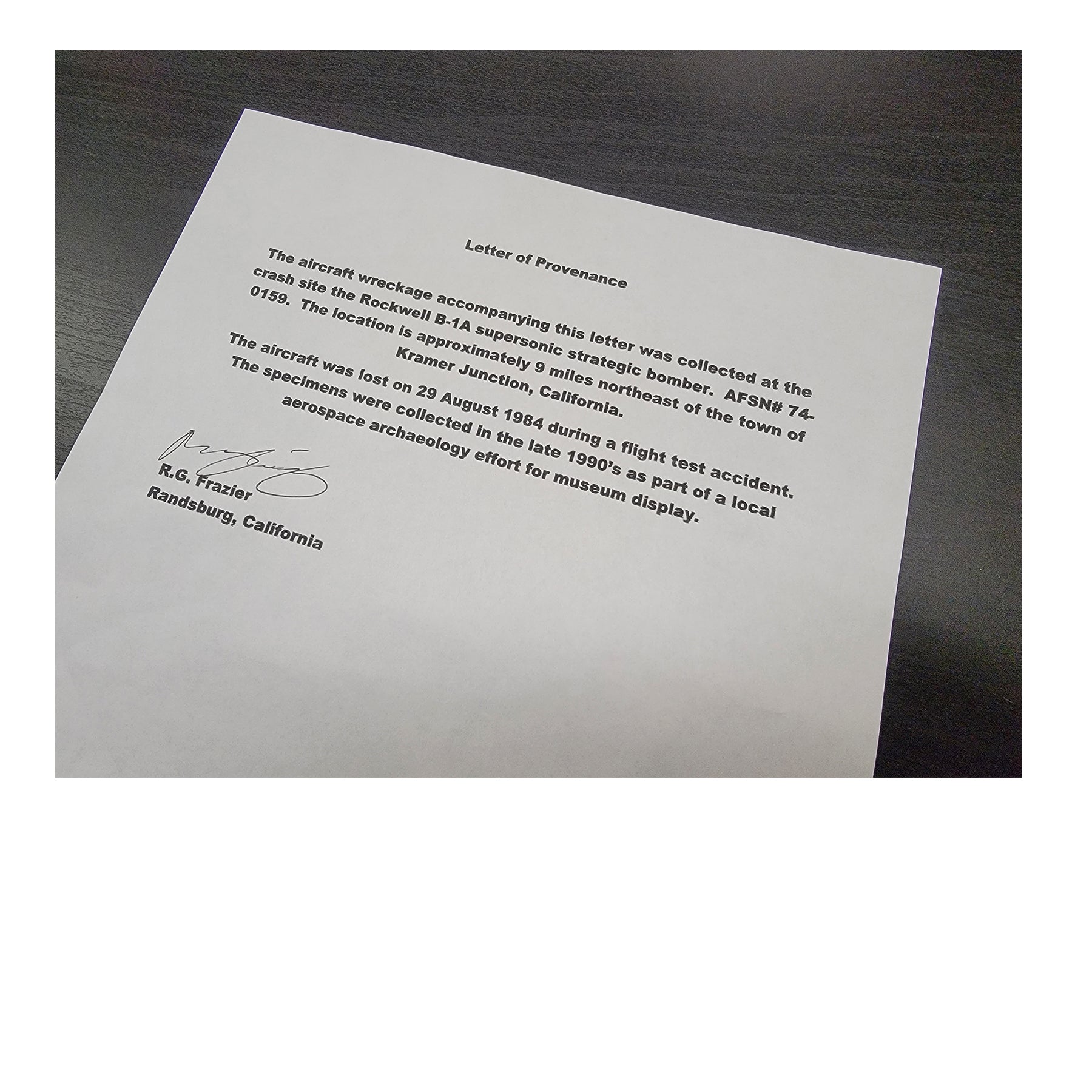
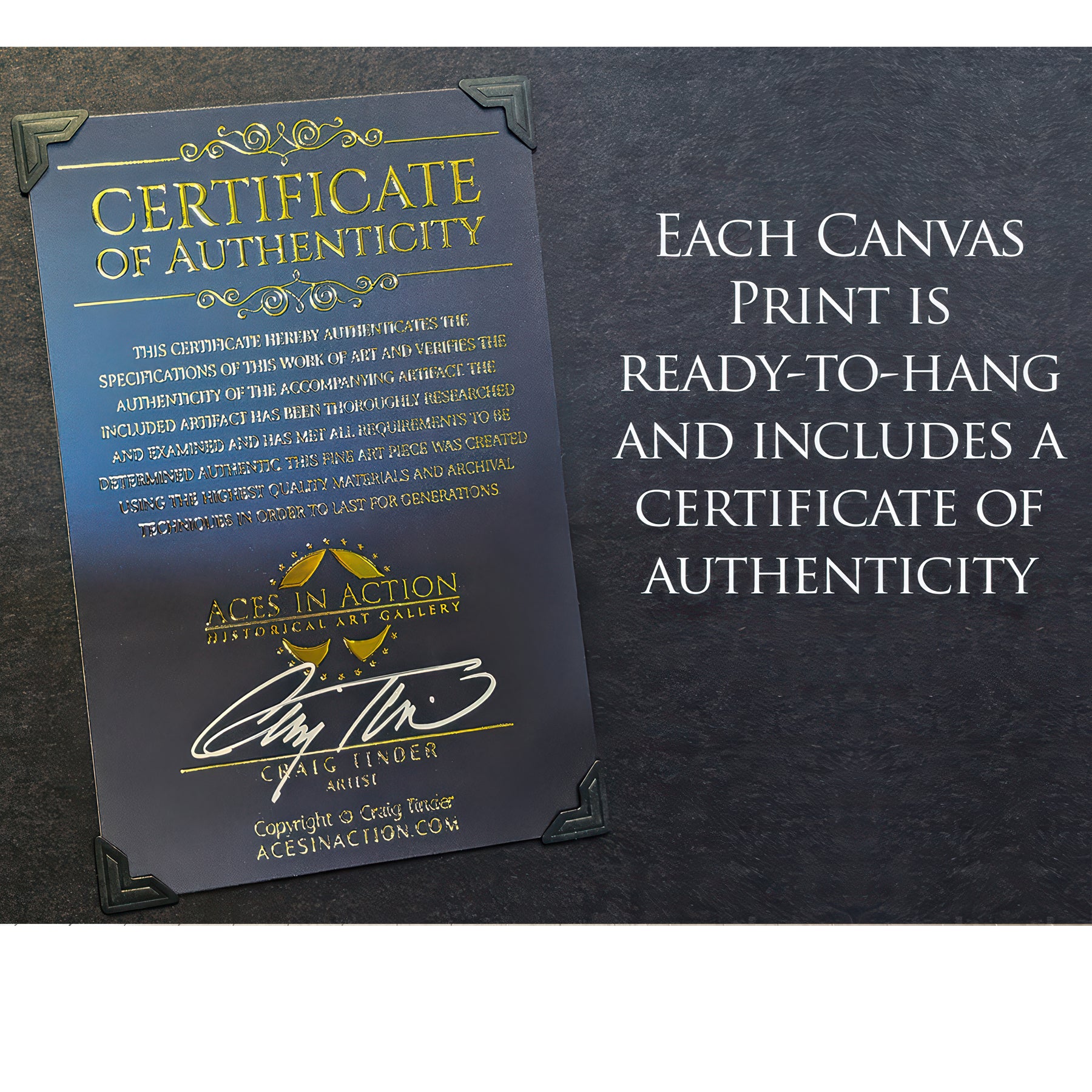
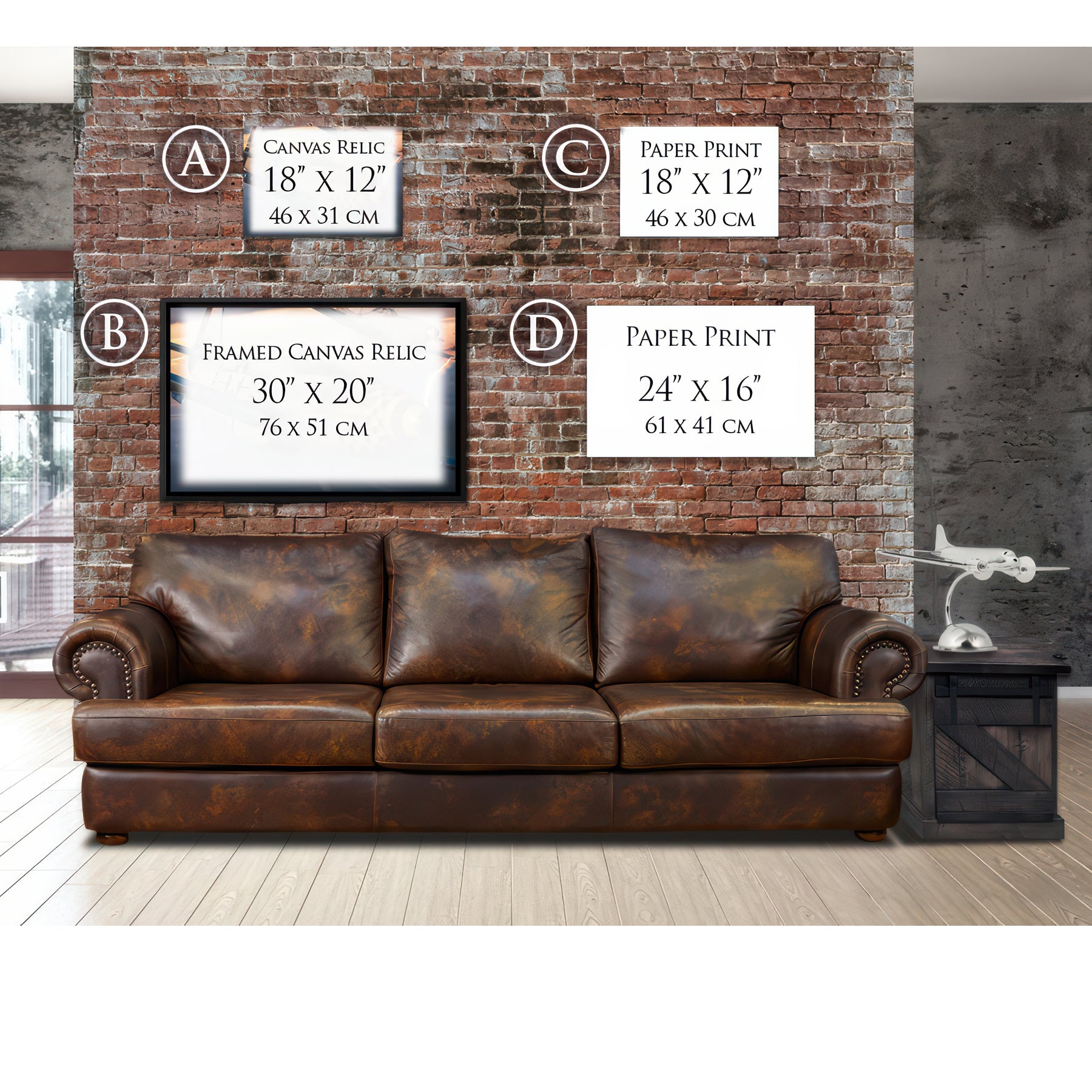
Now available in two exclusive formats: a 30"x20" Hardwood Framed Canvas Edition - Limited to Only 20 and an 18"x12" Canvas (Framed or Unframed) - Limited to Only 30. Each art piece includes an AUTHENTIC RELIC, Certificate of Authenticity, and is hand-signed by the Artist. Quantities are extremely limited—Once They're Sold Out, They're Gone!

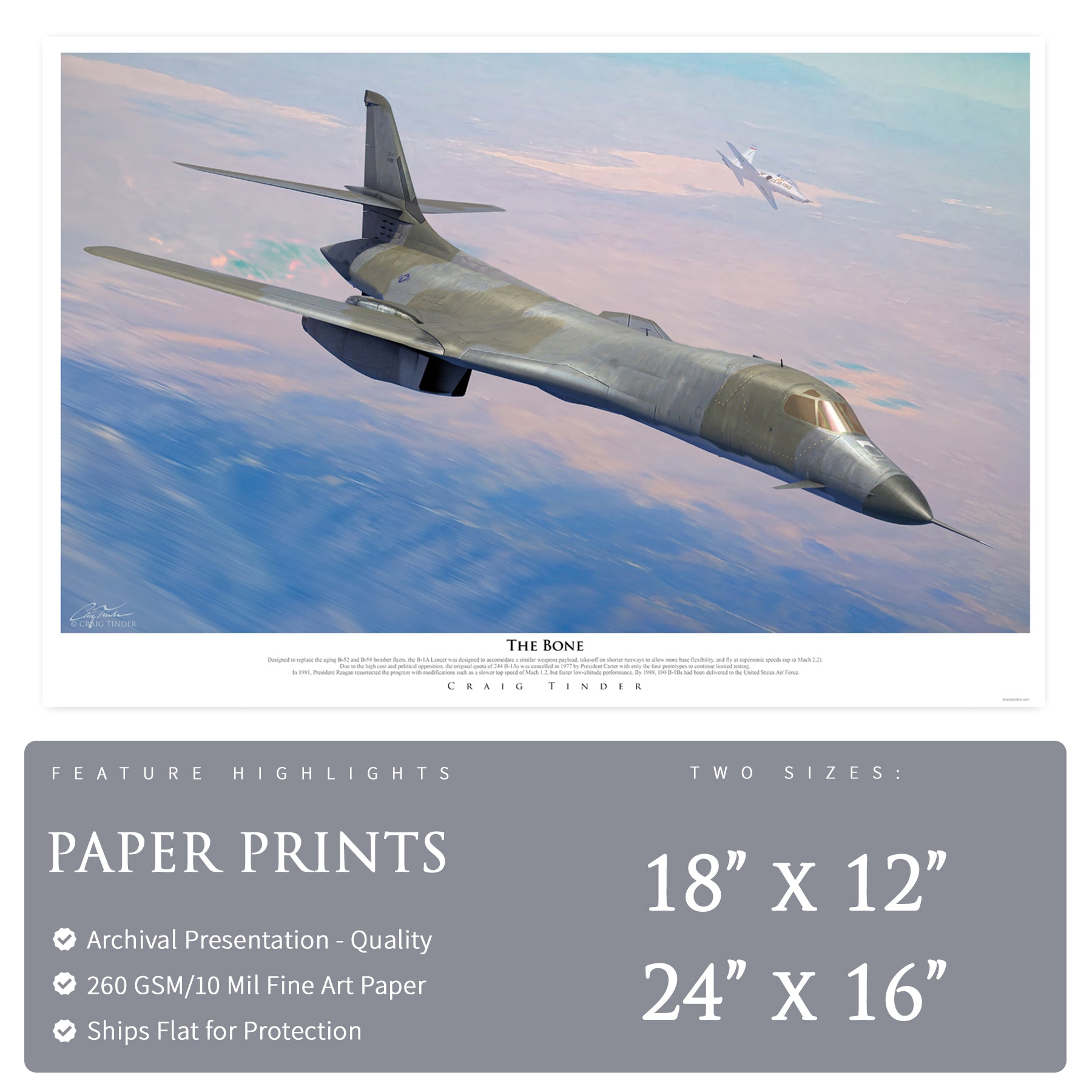
This Fine Art Print by Artist Craig Tinder illustrates the initial test program of the supersonic B-1 (B-One) bomber.

The Story Behind the Print:

Originally designed in the early 1970s to replace the aging fleets of B-52 Stratofortresses and B-58 Hustlers, the B-1A Lancer was intended to carry a similar weapons payload while incorporating several critical advancements. Among these improvements were the ability to take off from shorter runways, allowing for greater base flexibility, and the capacity to fly at supersonic speeds, reaching up to Mach 2.2. The aircraft’s swing-wing design provided versatility in flight dynamics, allowing it to switch between high-speed supersonic flight and slower, low-altitude penetration modes to avoid enemy radar.

However, the high cost and substantial political opposition to the program became significant obstacles. By 1977, President Jimmy Carter canceled the full-scale production of the B-1A, which had been planned to produce 244 units. Only four B-1A prototypes were completed and continued in limited testing. The decision to cancel the B-1A was largely influenced by the development of new intercontinental ballistic missiles (ICBMs) and cruise missiles, which were deemed more cost-effective solutions for the U.S. nuclear deterrent strategy.

In 1981, the program received new life when President Ronald Reagan resurrected the B-1 concept, albeit with significant modifications. The revised B-1B Lancer was slower, with a reduced top speed of Mach 1.2, but its low-altitude performance was vastly improved, making it more adept at penetrating enemy air defenses. Additionally, upgrades in stealth technology made the B-1B more difficult to detect by radar. The B-1B was designed with a lower radar cross-section and better electronic countermeasures to enhance its survivability in hostile environments.

By 1988, 100 B-1B bombers had been delivered to the United States Air Force. While it was originally conceived as a nuclear-capable bomber, the B-1B later transitioned into a conventional role, serving in multiple conflicts, including the Gulf War and the War on Terror. Its ability to carry large payloads of conventional munitions made it a versatile and invaluable asset for the U.S. military, and the B-1B continues to play an important role in modern U.S. air power.

Visit the Journal to read the full story!

Commissioned by Museums, Treasured by Collectors

This item is handmade by artist, Craig Tinder. Available to ship worldwide!

MATERIAL & DISPLAY

PREMIUM ALUMINUM

Our newest presentation format delivers exceptional color, contrast, and fine detail on a smooth gloss surface. The result has a luminous quality and clarity that is difficult to fully capture in photographs. Framed aluminum editions are finished in a solid black frame for a clean, contemporary presentation.

TRADITIONAL CANVAS

The original Aces In Action presentation features gallery-wrapped canvas, with framed editions presented in our traditional black floater frame. Canvas offers a classic, textured fine-art presentation and remains available on select Relic Artwork editions while inventory lasts.

AVAILABLE SIZES & FORMATS

  • 18" × 12" (45.7 × 30.5 cm) — Premium Aluminum or Canvas; available framed or unframed
  • 30" × 20" (76.2 × 50.8 cm) — Premium Aluminum or Canvas; framed
  • 36" × 12" (91.4 × 30.5 cm) — Panoramic Premium Aluminum or Canvas; framed on select artwork

READY TO HANG

Every Relic Artwork edition arrives ready to hang. Unframed 18" × 12" editions include a rear wall-mount bracket, while framed editions arrive with hanging hardware installed. No additional framing or mounting is required before display.

ABOUT CRAIG TINDER

Craig Tinder is an artist and historical researcher whose work brings significant moments in military and aviation history to life. For more than 20 years, he has combined detailed research with traditional and digital illustration techniques to create historically accurate artwork for collectors, veterans, museums, and historical organizations.

Craig has been commissioned to create artwork, installations, and memorial projects for museums, military organizations, and historical institutions throughout the United States. His work is held in museum and private collections around the world, reflecting a career built around historical accuracy, craftsmanship, and preserving the stories behind the subjects he depicts.

Every Aces In Action artwork is created by Craig Tinder, making Aces In Action the official home of his historical artwork and collectibles.

Meet Craig Tinder →

SHIPPING & CARE

SHIPPING

Each Relic Artwork edition is individually handcrafted and completed by Craig Tinder. From engraving and assembling the Artifact Dock to preparing the relic, framing the artwork when selected, and completing the final inspection and packaging, every piece is finished specifically for its collector. Please allow additional time for this hands-on process before your artwork ships.

Gift wrapping is available for Relic Artwork, making it ready for presentation upon arrival.

DISPLAY & CARE

All Relic Artwork arrives ready to display. Unframed 18" × 12" editions include a rear wall-mount bracket, while framed editions arrive with hanging hardware installed.

Premium Relic Artwork editions are designed for long-term display. Keep artwork away from prolonged direct sunlight, excessive moisture, and extreme temperature changes. Dust gently with a clean, soft, dry cloth and avoid household cleaners or abrasive materials on the artwork, frame, relic, or Artifact Dock.

THE RELIC ARTWORK EXPERIENCE

Authentic History

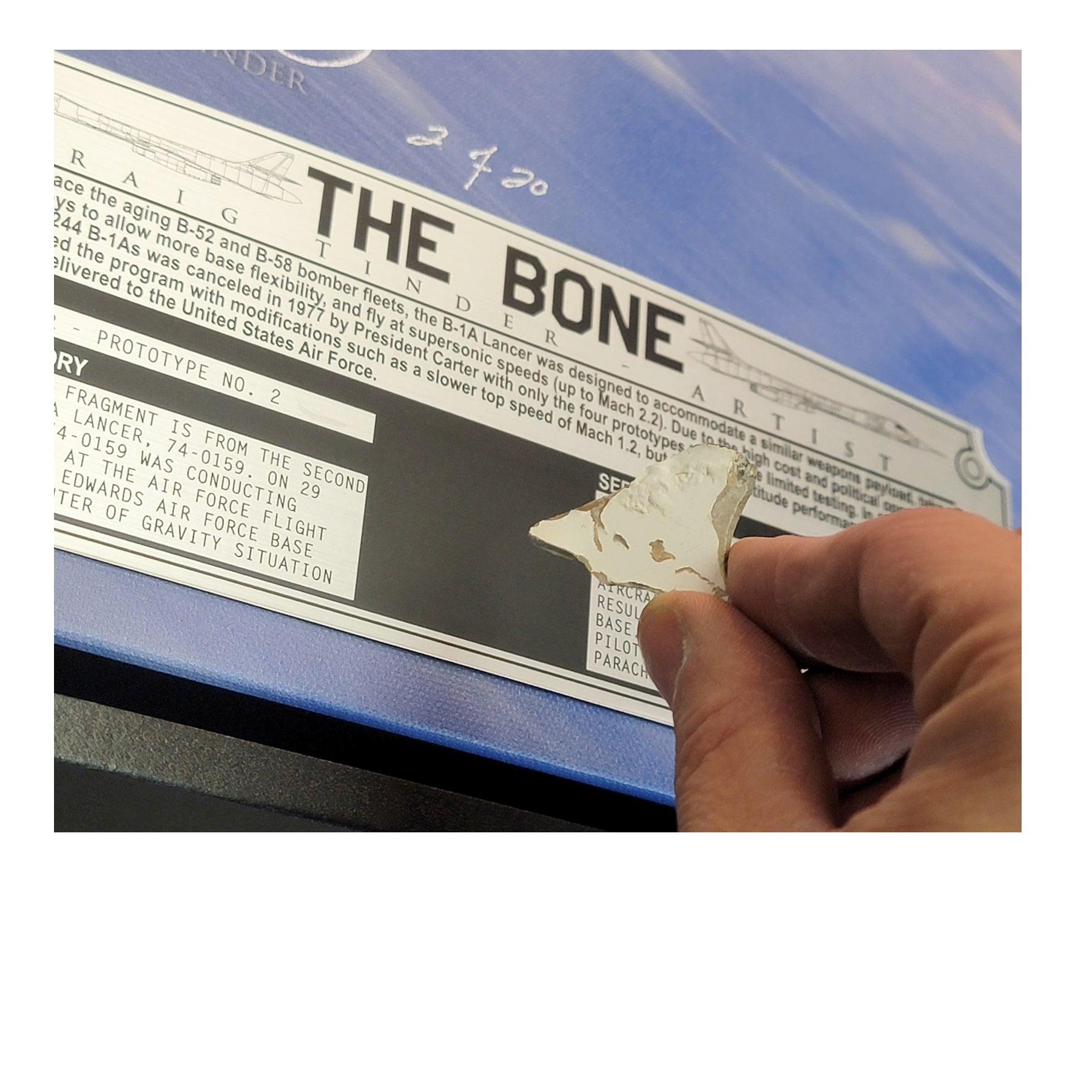
Each edition incorporates an authentic historical relic, presented on a custom laser-engraved Artifact Dock with details connecting the artifact to its history.

Handmade by Craig Tinder

Every Relic Artwork edition is assembled in Craig's studio, where it is signed, numbered, crafted, inspected, and prepared for its collector.

Made for Collectors

From the Certificate of Authenticity to the finished presentation, each detail is designed to create a collectible that preserves a tangible connection to history.