
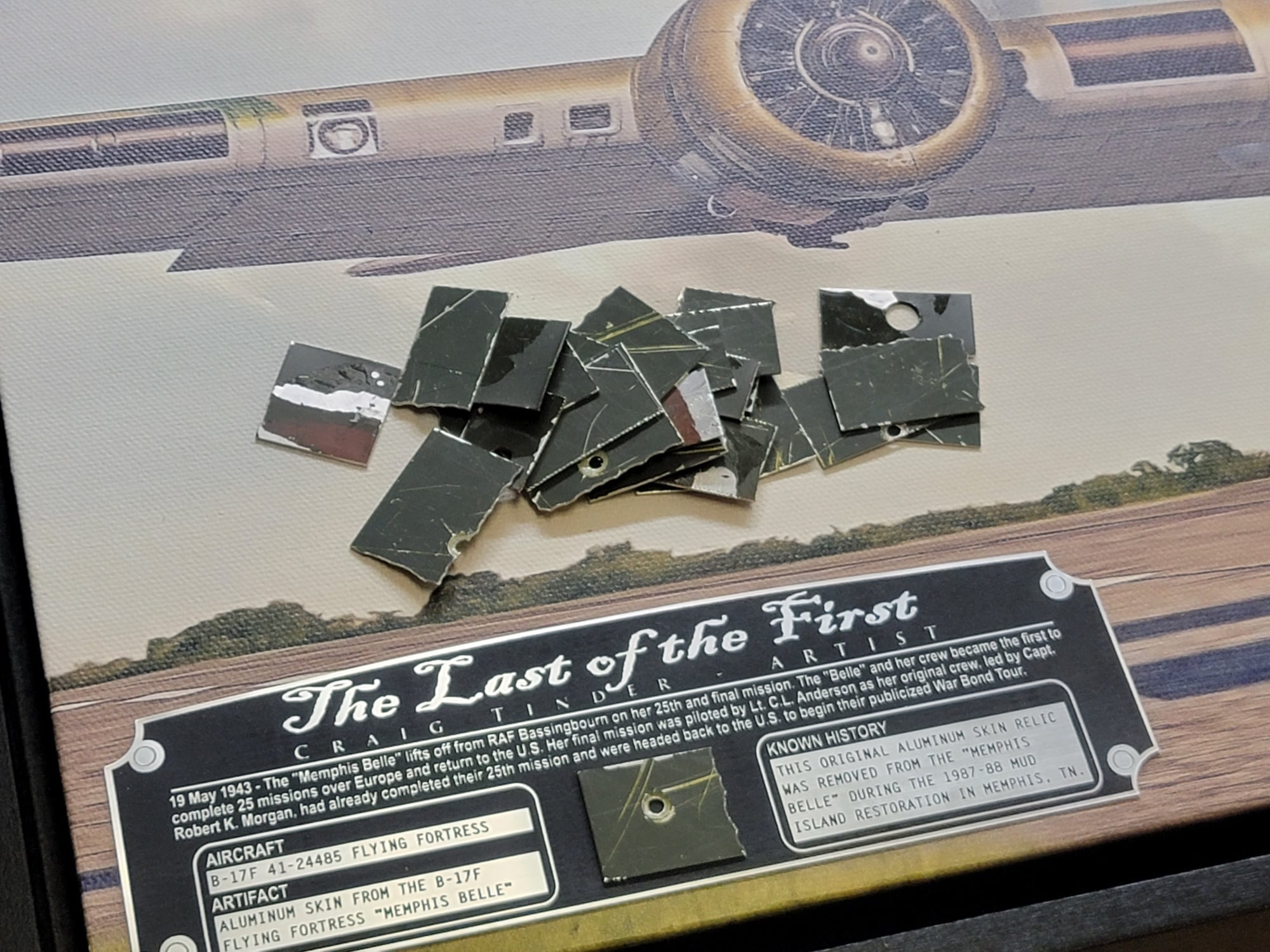
The Memphis Belle has been part of my interest in aviation art since childhood. I had a technical poster of the famous B-17 on my bedroom wall, and for years I wanted to create an artwork that connected the aircraft's history with an authentic piece of the bomber itself.
That opportunity eventually came through my friend Glenn Parker of Majestic Frames, who had known Memphis Belle pilot Robert K. Morgan. Glenn had retained pieces of original aluminum removed during an early phase of the bomber's preservation and restoration.

Original 1940s aluminum from Memphis Belle preserved from an early restoration effort.
Original Aluminum from Memphis Belle
From 1987 to 2002, Memphis Belle was displayed at Mud Island in Memphis under the care of the Memphis Belle Memorial Association. Restoration and preservation work during this period involved removing deteriorated original skin. The fragments preserved by Glenn came from that original wartime aluminum.
The pieces retain evidence of the aircraft's finish, including exterior paint and interior zinc-chromate primer; some also preserve rivet holes. Rather than being generic B-17 material, these fragments are directly connected to the famous aircraft itself.
Why “The Last of the First”
Memphis Belle became one of the best-known American bombers of World War II after completing 25 combat missions with its crew and returning to the United States for a highly publicized war-bond tour. I limited The Last of the First artwork to 25 examples in recognition of those 25 missions.
For me, the project closed a circle that began with the B-17 poster on my childhood wall: research, artwork and a surviving piece of the actual aircraft brought together in a single project.

Share: