
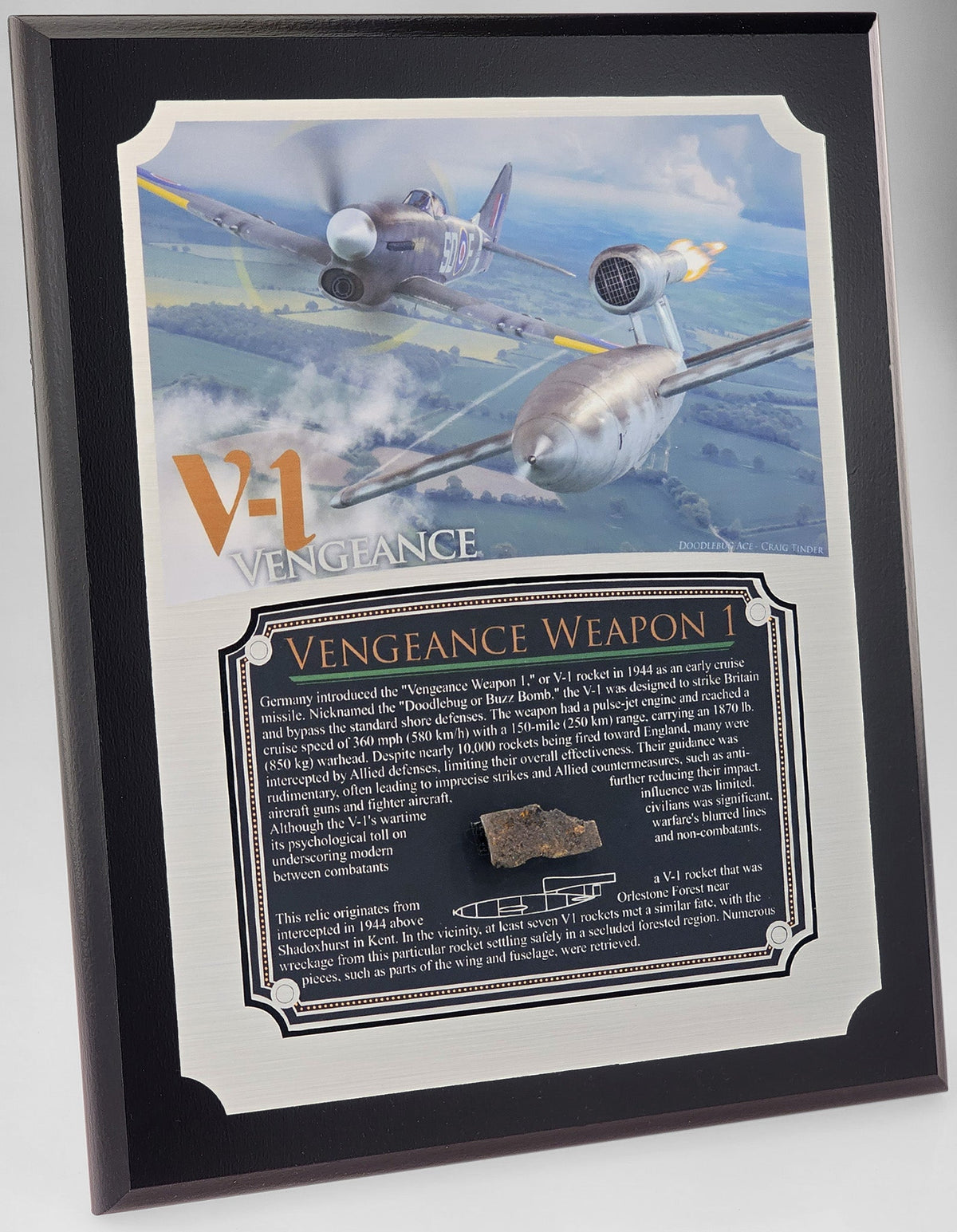
Doodlebug Ace tells the story of RAF Squadron Leader Joseph “Joe” Berry and the campaign to intercept Germany's V-1 flying bombs before they reached British cities in 1944.
The V-1 Threat
The V-1 was an early cruise missile powered by a pulsejet engine. Launched primarily against London and southeastern England beginning in June 1944, its distinctive engine note led civilians to call it the “buzz bomb” or “doodlebug.” When the engine stopped, those below knew the weapon was beginning its final dive.
Defeating the V-1 required a layered defense of anti-aircraft guns, barrage balloons and high-performance fighters. Interceptor pilots needed enough speed to catch a weapon flying at roughly 400 mph at low altitude.
Joe Berry
Berry became the most successful V-1 interceptor pilot, credited with destroying more than sixty flying bombs. Many of his interceptions were made at night, when spotting the small, fast target was particularly difficult.
He flew several aircraft types during the anti-V-1 campaign, including the Hawker Tempest, one of the few piston-engine fighters with the low-altitude speed needed to pursue the weapon effectively.
Berry survived the V-1 campaign but was killed in action on 1 October 1944 while flying a night intruder mission over Germany. Doodlebug Ace commemorates the unusual air-defense battle in which pilots fought not other aircraft, but pilotless weapons aimed at civilian targets.


Share: