
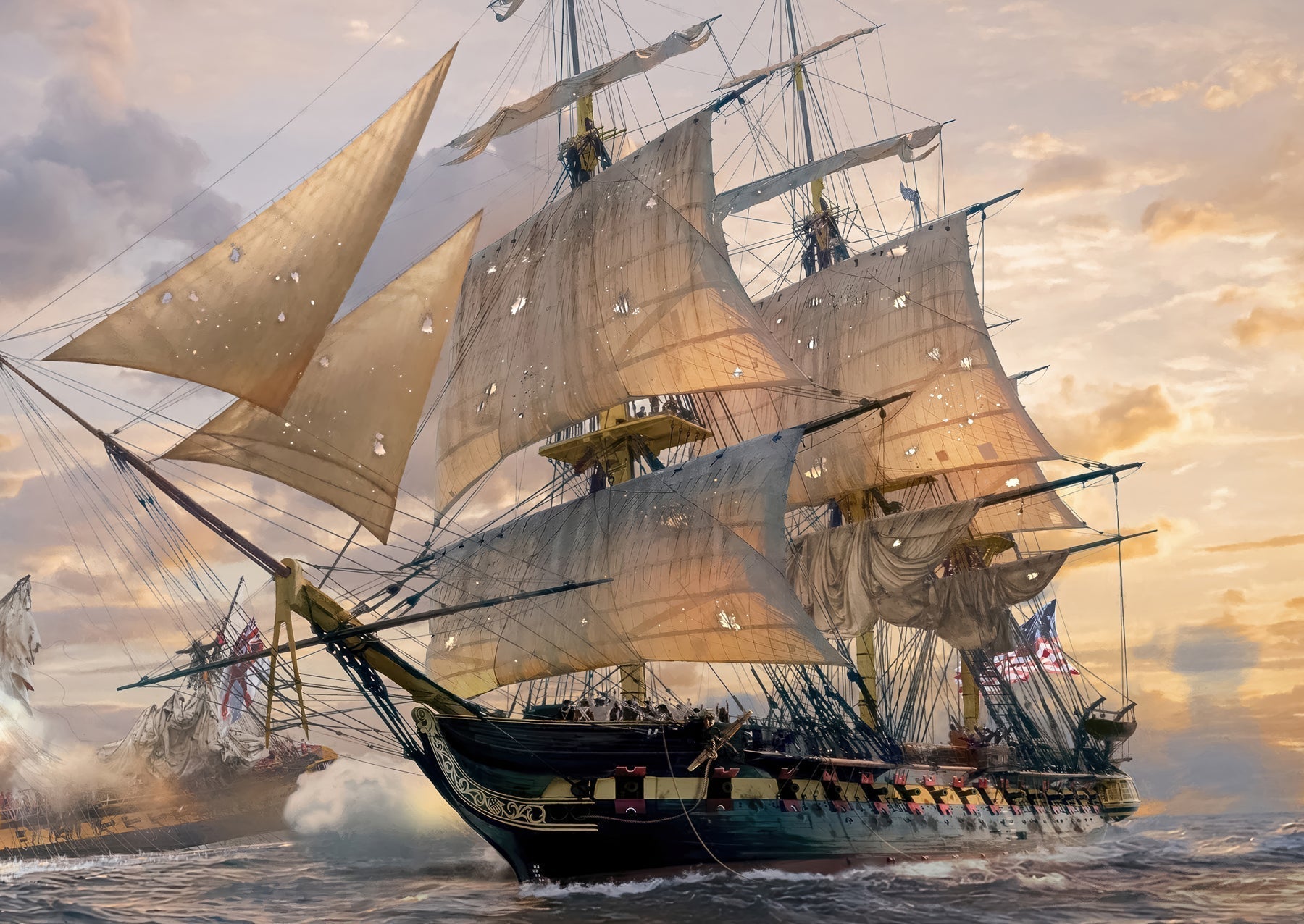
Maiden Farewell depicts RMS Titanic departing Queenstown, Ireland—today Cobh—on 11 April 1912. It was the liner's final port of call before beginning the Atlantic crossing that ended four days later with one of history's best-known maritime disasters.
The Final Port of Call
Titanic had departed Southampton on 10 April and stopped at Cherbourg, France, before reaching Queenstown the following day. Because the harbor was too shallow for the enormous liner to dock, passengers and mail were transferred by tender. After leaving Ireland, Titanic headed west toward New York with more than 2,200 people aboard.
15 April 1912
Late on 14 April, the ship struck an iceberg in the North Atlantic. Flooding spread through a series of watertight compartments, and Titanic sank in the early hours of 15 April. More than 1,500 passengers and crew died.
The disaster exposed serious weaknesses in contemporary maritime safety practices, including insufficient lifeboat capacity and shortcomings in the handling of ice warnings and wireless communications. The international response contributed to major changes in safety regulations, emergency communications and North Atlantic ice patrols.
A Physical Connection to Titanic
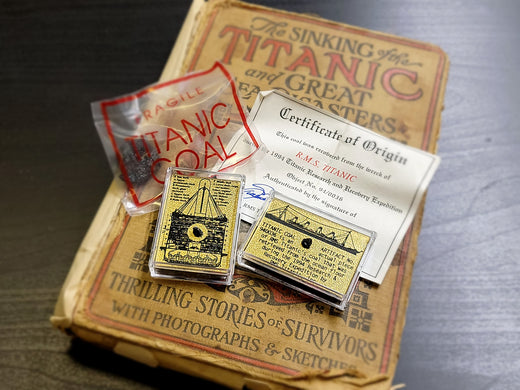
The relic associated with Maiden Farewell is recovered coal connected with the Titanic wreck site. Rather than depicting the sinking, the artwork preserves the quieter final departure from Ireland—when the ship and those aboard were beginning what was expected to be an ordinary Atlantic crossing.


Share: