
AUTHENTIC RELIC ARTWORK BY CRAIG TINDER
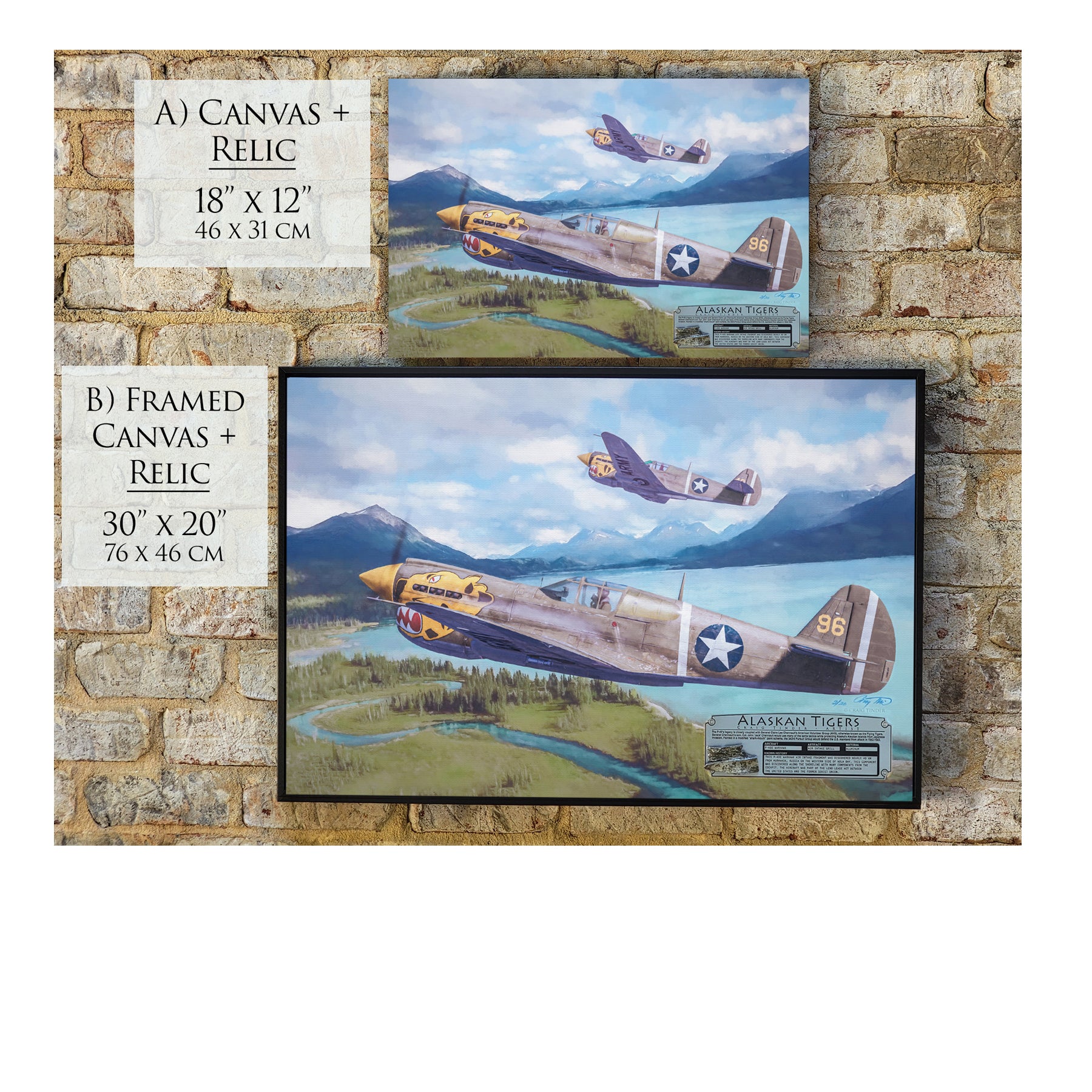
P-40 Warhawk - Alaskan Tigers | INCLUDES: Air Intake Fragment
Pairs well with
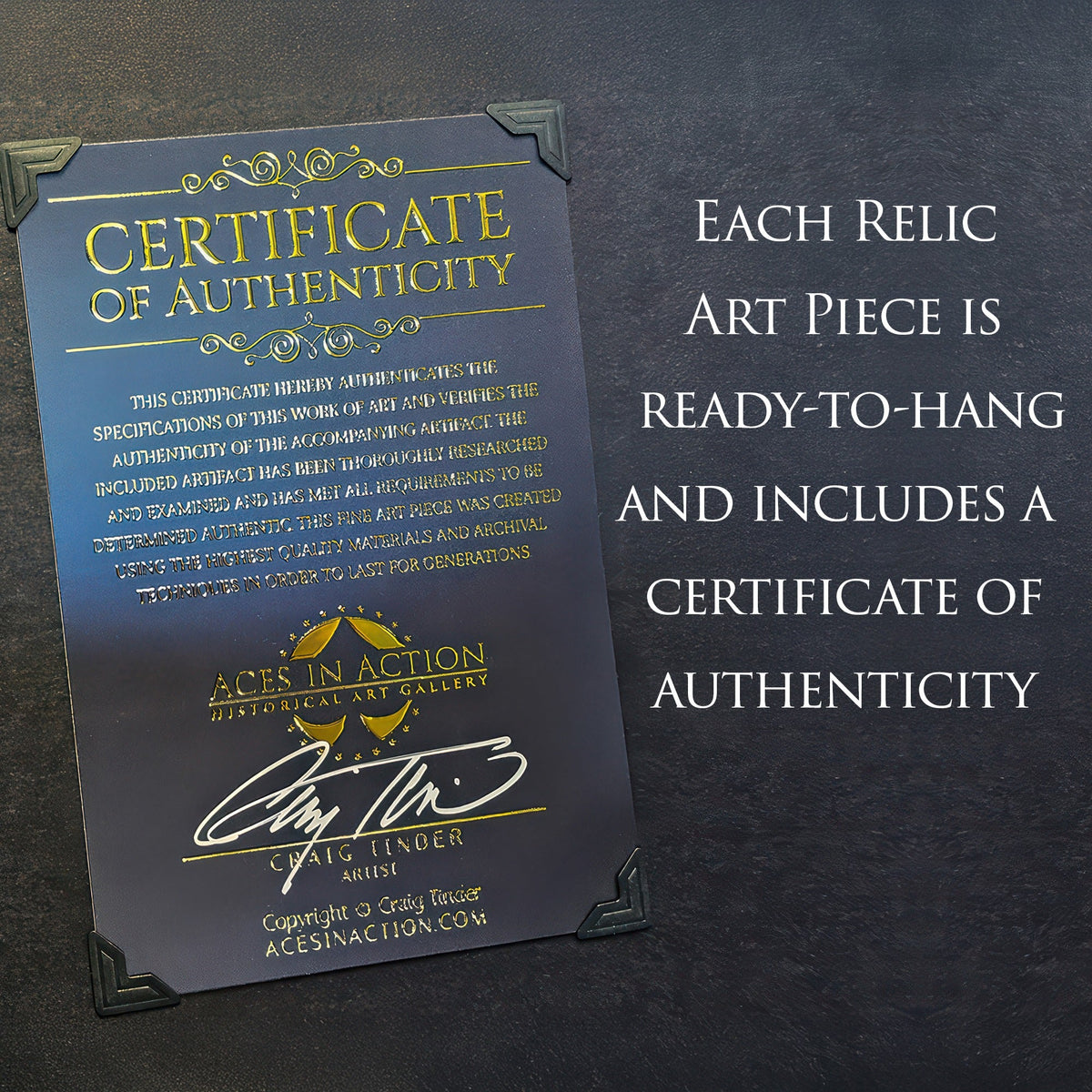
Authentic historical relic · Signed & numbered by Craig Tinder · Certificate of Authenticity included
P-40 Warhawk - Alaskan Tigers | INCLUDES: Air Intake Fragment
If you have any questions, you are always welcome to contact us. We'll get back to you as soon as possible, within 24 hours on weekdays.
-
Shipping Information
Use this text to answer questions in as much detail as possible for your customers.
-
Customer Support
Use this text to answer questions in as much detail as possible for your customers.
-
FAQ’s
Use this text to answer questions in as much detail as possible for your customers.
-
Contact Us
Use this text to answer questions in as much detail as possible for your customers.
STORY BEHIND THE ARTWORK
ABOUT THE RELIC
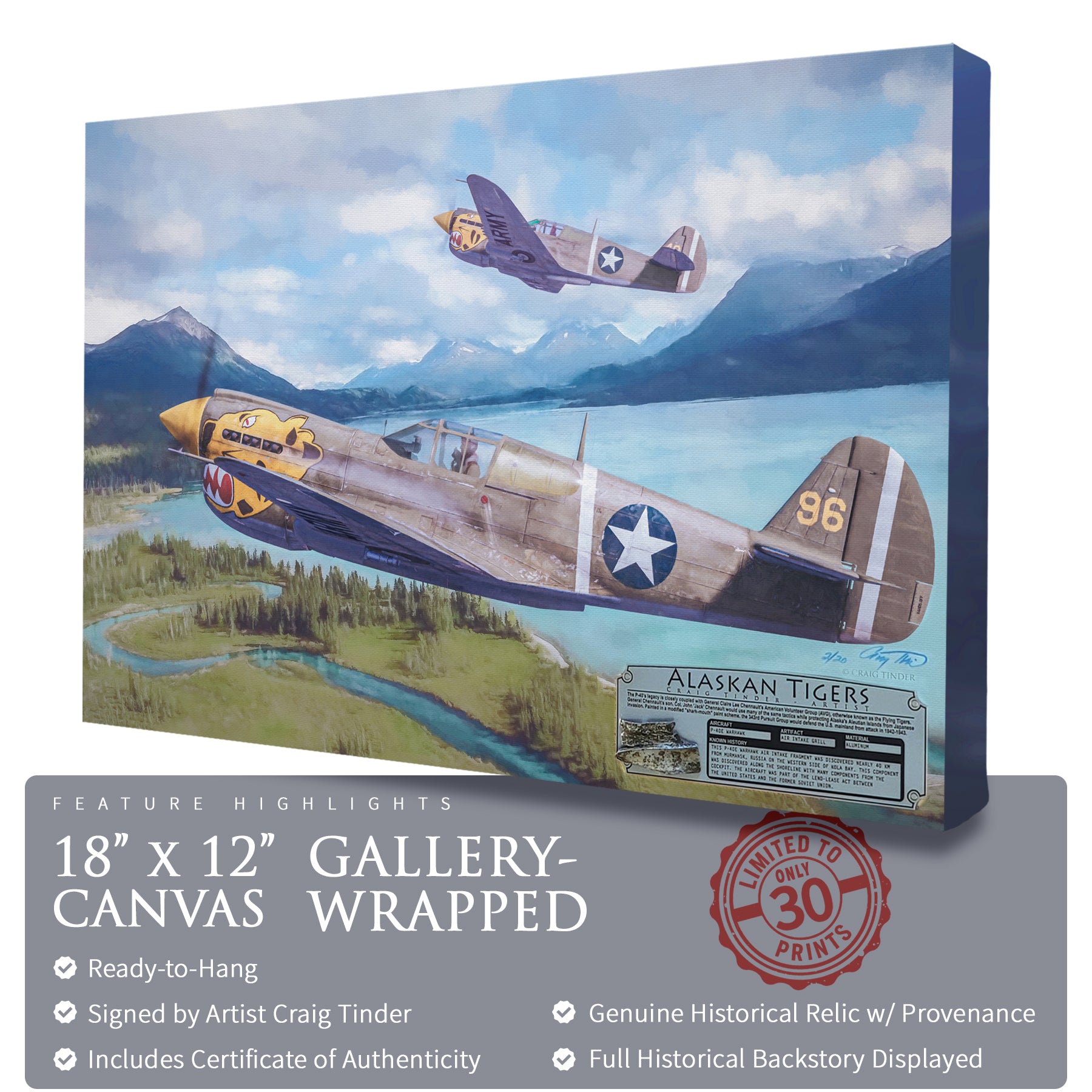
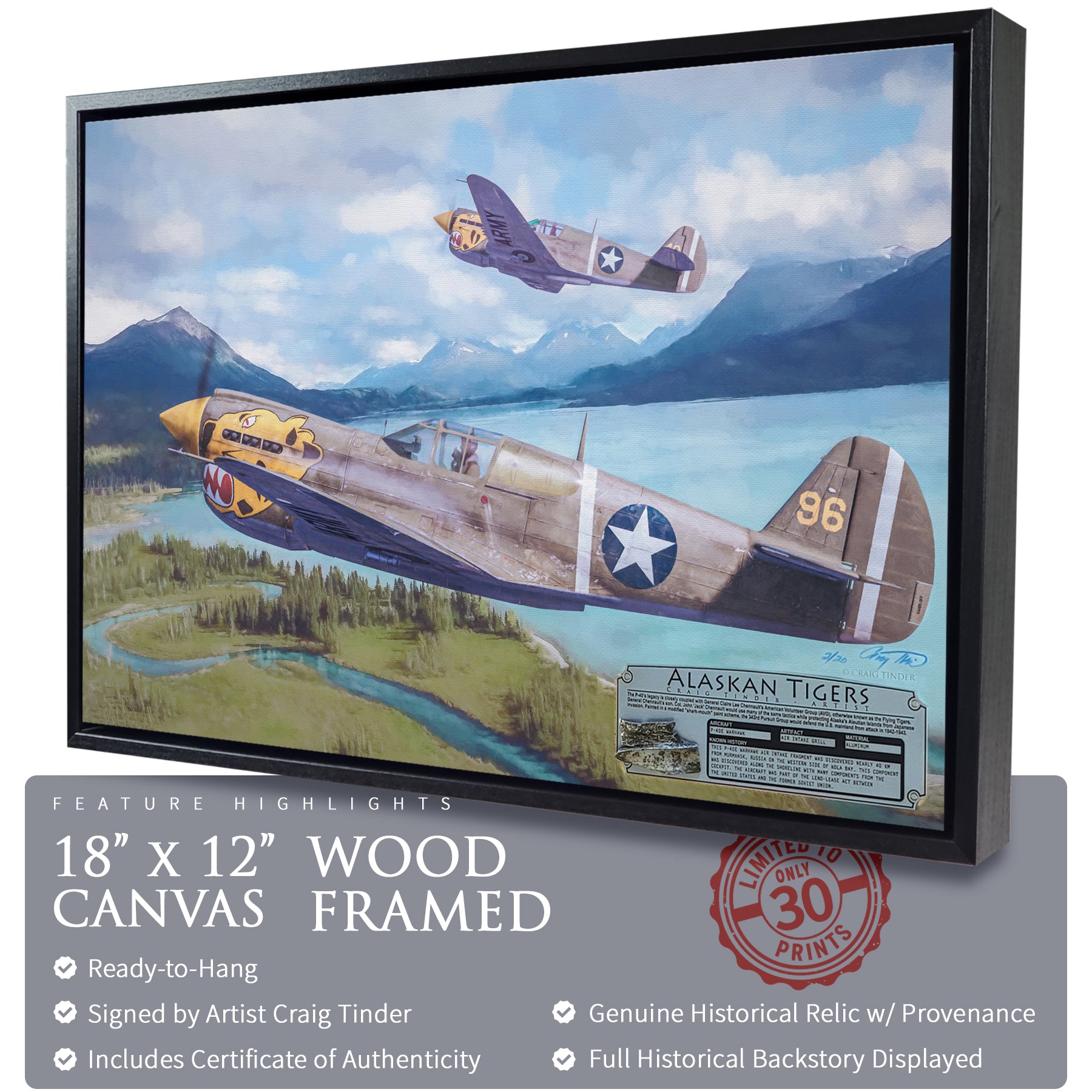
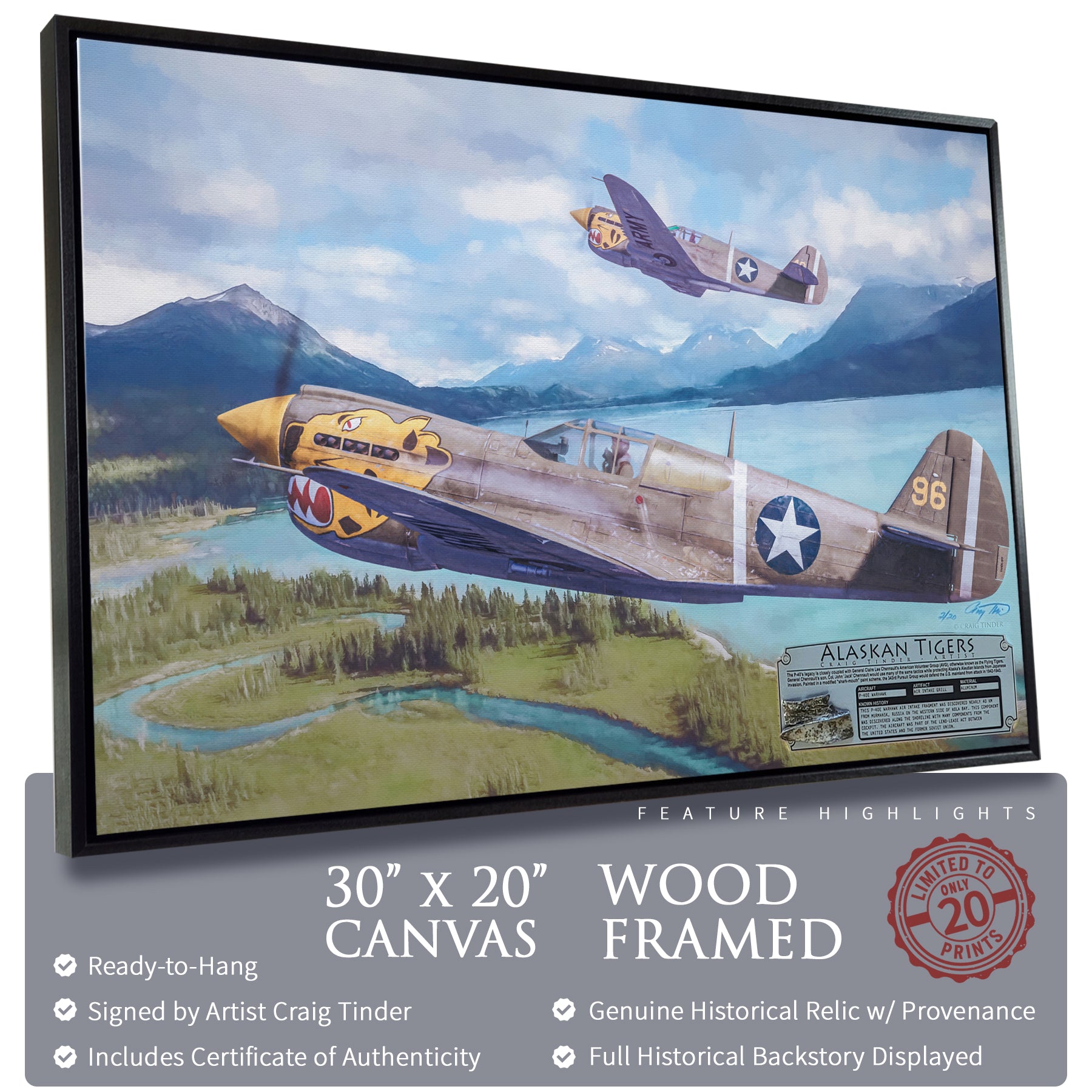
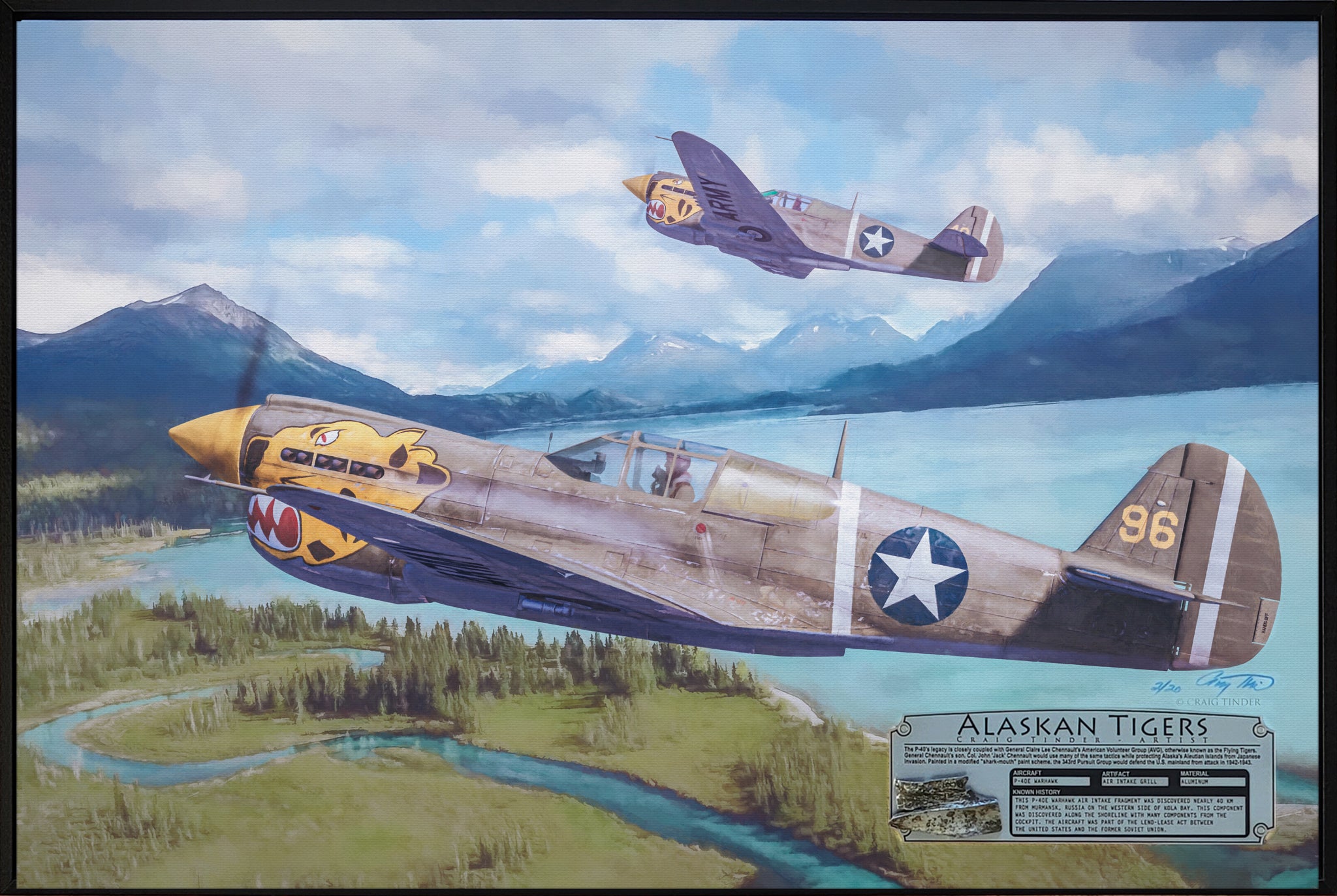
This P-40E Warhawk air intake fragment was discovered near Murmansk, Russia, along the western shoreline of Kola Bay, approximately 40 kilometers from the city. The fragment, along with several other cockpit components, originated from a P-40E Warhawk, an aircraft delivered to the Soviet Union under the Lend-Lease Act during World War II. This international agreement between the United States and its allies provided critical support in the form of war materials, including aircraft, to help in the fight against the Axis powers. P-40E Warhawk Air Intake fragment
During the war, many P-40s were flown to Alaska and then ferried across the Bering Strait into Soviet territory, eventually reaching the northern regions of Russia. The rugged P-40, known for its resilience and adaptability, became a key component of Soviet air defense. These aircraft were used to defend strategic locations, including the port city of Murmansk, which was a vital hub for Lend-Lease shipments. The harsh conditions of the Russian landscape and the unforgiving climate took a toll on both the pilots and the planes, leading to the loss of many aircraft in the remote wilderness.
The Lend-Lease program provided more than 2,400 P-40s to the Soviet Union, helping to reinforce their air forces in the face of relentless German attacks.
MATERIAL & DISPLAY
PREMIUM ALUMINUM
Our newest presentation format delivers exceptional color, contrast, and fine detail on a smooth gloss surface. The result has a luminous quality and clarity that is difficult to fully capture in photographs. Framed aluminum editions are finished in a solid black frame for a clean, contemporary presentation.
TRADITIONAL CANVAS
The original Aces In Action presentation features gallery-wrapped canvas, with framed editions presented in our traditional black floater frame. Canvas offers a classic, textured fine-art presentation and remains available on select Relic Artwork editions while inventory lasts.
AVAILABLE SIZES & FORMATS
- 18" × 12" (45.7 × 30.5 cm) — Premium Aluminum or Canvas; available framed or unframed
- 30" × 20" (76.2 × 50.8 cm) — Premium Aluminum or Canvas; framed
- 36" × 12" (91.4 × 30.5 cm) — Panoramic Premium Aluminum or Canvas; framed on select artwork
READY TO HANG
Every Relic Artwork edition arrives ready to hang. Unframed 18" × 12" editions include a rear wall-mount bracket, while framed editions arrive with hanging hardware installed. No additional framing or mounting is required before display.
ABOUT CRAIG TINDER
Craig Tinder is an artist and historical researcher whose work brings significant moments in military and aviation history to life. For more than 20 years, he has combined detailed research with traditional and digital illustration techniques to create historically accurate artwork for collectors, veterans, museums, and historical organizations.
Craig has been commissioned to create artwork, installations, and memorial projects for museums, military organizations, and historical institutions throughout the United States. His work is held in museum and private collections around the world, reflecting a career built around historical accuracy, craftsmanship, and preserving the stories behind the subjects he depicts.
Every Aces In Action artwork is created by Craig Tinder, making Aces In Action the official home of his historical artwork and collectibles.
Meet Craig Tinder →
SHIPPING & CARE
SHIPPING
Each Relic Artwork edition is individually handcrafted and completed by Craig Tinder. From engraving and assembling the Artifact Dock to preparing the relic, framing the artwork when selected, and completing the final inspection and packaging, every piece is finished specifically for its collector. Please allow additional time for this hands-on process before your artwork ships.
Gift wrapping is available for Relic Artwork, making it ready for presentation upon arrival.
DISPLAY & CARE
All Relic Artwork arrives ready to display. Unframed 18" × 12" editions include a rear wall-mount bracket, while framed editions arrive with hanging hardware installed.
Premium Relic Artwork editions are designed for long-term display. Keep artwork away from prolonged direct sunlight, excessive moisture, and extreme temperature changes. Dust gently with a clean, soft, dry cloth and avoid household cleaners or abrasive materials on the artwork, frame, relic, or Artifact Dock.
THE RELIC ARTWORK EXPERIENCE

Authentic History
Each edition incorporates an authentic historical relic, presented on a custom laser-engraved Artifact Dock with details connecting the artifact to its history.

Handmade by Craig Tinder
Every Relic Artwork edition is assembled in Craig's studio, where it is signed, numbered, crafted, inspected, and prepared for its collector.

Made for Collectors
From the Certificate of Authenticity to the finished presentation, each detail is designed to create a collectible that preserves a tangible connection to history.